
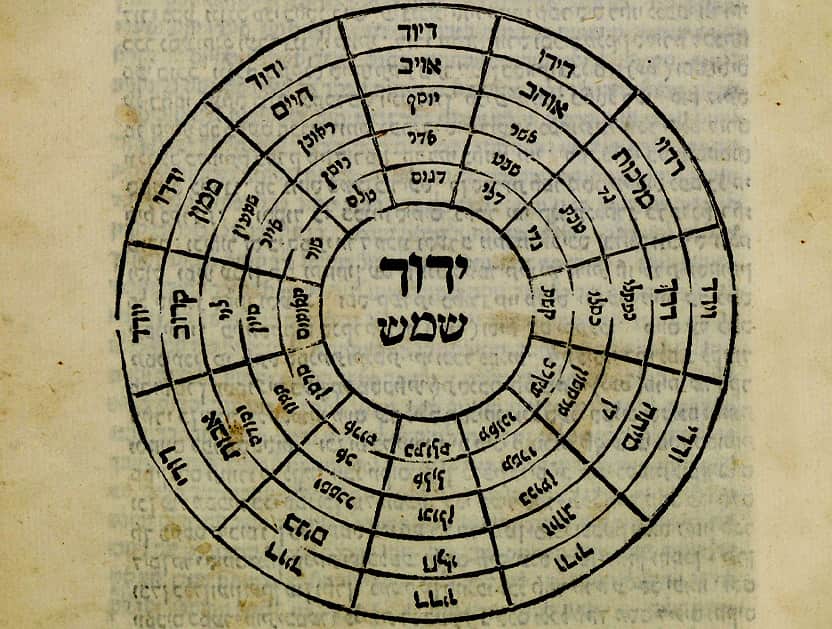
“He carved and created His world in thirty-two wondrous ways of wisdom, with three linguistic tools: with counting, with writing, and with speech.”
Sefer Yetzirah 1:1
Translation: Sefaria
In the opening line of the Iliad, Homer, the greatest poet of the ancient world (and perhaps of all worlds), asks the Muse to sing through him, and to pull a single thread from the tangled mass that is the Trojan War.
Scholars still debate whether Homer even knew of the invention of writing. Plato, the greatest philosopher of the ancient world (and perhaps of all worlds), lived some four centuries later. He was deeply familiar with writing, and seems to have held a great of. In the dialogue Phaedrus, Socrates tells his companions a fable. According to the story, writing first appeared in Egypt. It was invented by the god Thoth, who offered it as a gift to humanity. He entrusted the task of distributing this invention to King Thamus.
While the god praises the great virtues of writing, especially its wondrous ability to awaken and enhance human memory, the king remains skeptical. He tells the god something striking: that he who creates cannot be the one to judge whether his creation brings harm or benefit to the world. That task belongs to someone else. Because the god is so enamored of his new creation, he fails to see that writing will bring the opposite result. It will not strengthen memory, which comes naturally to human beings, but will instead produce mere recollection. Writing makes people dependent on it, becoming a tool that serves to remind us, rather than one that actually develops memory. And so, while the reader believes he is acquiring wisdom, he is only gaining an illusion of wisdom.
How different this fable is from the way Jewish culture understood the invention of writing.
In Sefer Yetzirah, the mysterious work of Jewish mystical thought, and perhaps the most the influential of all, we read that God created His world through “thirty-two wondrous ways of wisdom,” meaning the twenty-two letters of the Hebrew alphabet and the first ten numbers.

At a certain point in this short book, the anonymous author describes the essence of divine creation in vivid language that astonishingly echoes human literary creation:
“He formed matter from chaos and made nothingness somethingness; He hewed great columns out of imperceptible Air.”
Sefer Yetzirah 2
Translation: Sefaria
In the final paragraph of Sefer Yetzirah, we encounter a parable about Abraham, the Jewish Patriarch. Abraham, we are told, understood all the secrets of letters and numbers, and by doing so was able to imitate God in creating the world and the souls within it. This was possible because God made two covenants with humanity: the covenant of circumcision, but also the covenant of the tongue.

In other words, God granted us writing. And whoever knows and masters this gift perfectly, the way Sefer Yetzirah describes, can rule the entire world and perfectly imitate the divine.

These two concepts, separated by more than a thousand years (we do not know exactly when Sefer Yetzirah was written, although the earliest commentaries appear only in the tenth century) reappear today in our debates about the new technologies that have taken over our lives.

When the internet, and later social media, entered our world, their creators promised nothing less than superpowers. Anyone who opened a Facebook, Twitter, or Instagram account could be everywhere at once. Connect with anyone. Spread their words, ideas, and stories throughout the world.

In the early years of social media, its critics were few and dismissed as conservatives or Luddites afraid of new technologies. In recent years, however, the view has shifted completely. A fundamental understanding has begun to take hold: Digital tools must prove their worth to us and serve our needs. They are not to be embraced before they are evaluated as to whether they truly improve our lives, though to be fair, this is often still forgotten amid global excitement and the rush to adopt new innovations in the field.
If at first, we were swept up in the enthusiasm of the god Thoth and imagined ourselves as Abraham, today it is much easier to identify with the king who received this questionable gift in his hands.


