

In 1973, Lieutenant Dan Avidan returned home after more than three years in Egyptian captivity. On the outside, he looked physically fine, but the time spent in captivity had forever left its mark on his health: the injuries and torture he suffered damaged his legs and diabetes spread through his body due to his emotional state. Like many of those released from captivity, he tried to go back to a normal life with his family and his daily work routine at Kibbutz Ein Hashofet, but the shadows of his haunting experience followed him everywhere.
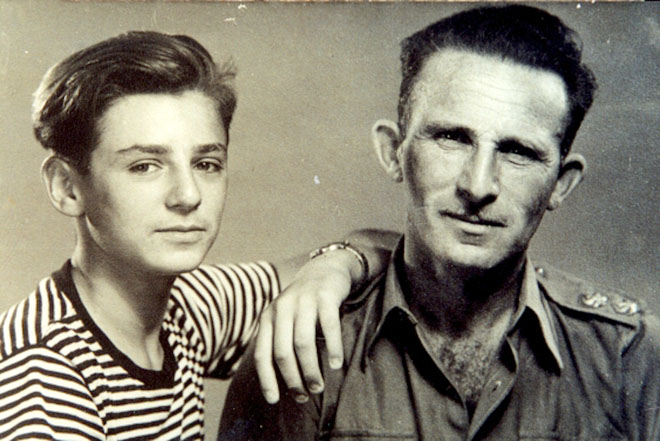
Years afterward, there was one thing Avidan took with him everywhere and with which he refused to part – a book. A signed copy he always carried with him – to the point that when he was rescued from a serious car accident and all his personal items were destroyed, the first thing he tried to do was to get a new signed copy.
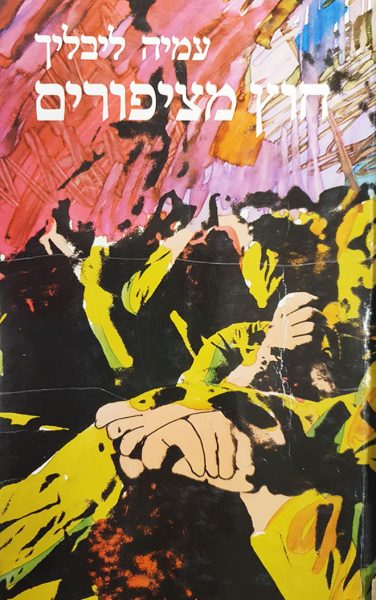
The book is called Chutz Mitziporim (lit. “Aside From Birds”, later translated into English as Seasons of Captivity: The Inner World of POWs). It is a faithful recounting of the long stretch of time he spent with nine other Israeli soldiers in Egyptian captivity. The book is based on interviews with the ten former prisoners of war. The author, Professor Amia Lieblich, still clearly remembers Avidan’s appeal to her for a new copy: “He treated it like a lucky charm,” she recalled. “It was a source of pride for him, his source of strength, and this is why he always kept it close wherever he went. Always.”
What did the book contain to make it so meaningful for Dan Avidan, the former captive, as well as all those mentioned in it?
Did they gain strength from reliving the descriptions of how they fell into captivity? From reading about the interrogations, the torture, and the isolation they endured? The book in fact reveals something far greater: the incredible mental strength these ten soldiers already possessed at the time, the internal world of those who endured three unbearable years, and perhaps most importantly – their social organization, which included a weekly assembly where decisions were made on a democratic basis, joint study sessions, board games, and even schedules for dishwashing and making food – all the ways in which the captives tried to restore a sense of routine and normality in an utterly abnormal situation.
In an era when the concept of psychological trauma (or PTSD) was not yet widely recognized – indeed, it doesn’t even appear in the book – the idea of writing and publishing a book about the experience of captivity was groundbreaking. The internal feelings which helped the prisoners survive in Egyptian captivity for so long likely also helped them understand that sharing their story and experiences would be of value, to themselves and to others. The book includes their own insights from their period in captivity and interviews with the spouses of some of the captives, effectively seeking to encompass this difficult experience from all angles.
They were not the only ones who did this. More than a few former hostages and prisoners of war have felt the need to document their own history. For some, exposing and working out the story was no less important an experience than the captivity itself. I set out on a journey to learn the story behind these revelations, and discovered them to be an incredible source of strength and even comfort.
A Book is Born
The year was 1986. Amia Lieblich was then a particularly busy scholar and author, when she got a phone call from Col. (res.) Rami Harpaz. He, like Avidan, was among the ten soldiers who were in Egyptian captivity together and who were released 13 years earlier. Since that time, an idea had been brewing in his mind, and he now felt the time had come to realize his vision.
Harpaz had read some of Lieblich’s books and understood that she was the woman he was looking for: a scholar and social psychologist, who knew how to weave together the stories of a number of individuals who have something in common, into one fascinating tome.
He thought there was value in a joint investigation of what happened during those years in captivity, and was hoping that she would acquiesce and write about it. Lieblich knew of Rami and his comrades from the well-publicized story of Israeli pilots translating JRR Tolkien’s The Hobbit while in Egyptian captivity, but she was up to her neck in prior obligations at the time. When he asked, she responded: “Get back to me in a year.”
As befits a person raised on a kibbutz established by German Jews, punctuality was a must for Harpaz. Therefore, exactly one year later, Harpaz appealed once again to Lieblich: “Are you free, now?” Surprised at his diligence, she read one of the journals he left her, a document from the joint assemblies in captivity managed by each of the prisoners in turn, and immediately understood that she had to write their story.
She had only one condition: Harpaz had to speak to all his other comrades from the period of captivity and ensure they were all interested in taking part in the book. The sense of pride that Harpaz and his friends shared concerning how they spent their time in captivity and the desire to talk about what they went through emotionally, got them to agree. They felt they had a story to tell the world and Israeli society in particular.

“It’s perhaps worthwhile to have been taken captive just for that”
Among those ten IDF prisoners of war who were held in the notorious Abbasiya prison were both senior pilots and civilian IDF employees who operated mobile canteens. Many testified that the interrogations and torture were not the worst part of the experience. The uncertainty and isolation, not knowing whether people in Israel were even aware they were alive – this is what burdened them in their first months in captivity, which they spent isolated from one another. When they were finally transferred to a shared cell and began receiving letters and Red Cross visits, the improvement in their state of mind was enormous.
When the ten released POWs summarize what their experience in captivity gave them in the book, they mention the education they acquired and the social skills they learned in finding ways to all get along. They made particular note of Rami Harpaz’s critical role in organizing their shared life in the cramped, difficult conditions in which they were living.
One of them, Motti C., recalled: “…[Rami] was our teacher. He he built us all in the proper way. I have never said it to him, but living with a man like him in one room for three years proved to be an experience for a lifetime. It’s perhaps worthwhile to have been taken captive just for that” (Seasons of Captivity, p. 261). Motti did not suffice with what he told Lieblich in the interview for the book, but also took care to repeatedly tell it to Harpaz himself when they would meet to mark the anniversary of their release from captivity, Lieblich told us.
But not everyone managed to go back to normal life. Another released POW, Motti Bablar, described the heavy burden he carried with him, sometimes too heavy. In an interview he gave many years after the book was published, he described the trauma he dealt with, a concept that didn’t exist in Israeli society at the time: “It was easier in Egyptian prison, at least there I only had to worry about myself! At home, I had a wife and three children I had to care for.”

“These are the boundaries of the field – act!”
Rami Harpaz’s name comes up again and again and his exceptional stature among the captives comes through across the pages of the book. His strong personality, the quiet leadership he displayed, his decision-making abilities, his charisma and humanity are all mentioned over and over. Even after he was released, Harpaz continued to rise through the ranks of the Air Force and moved up in the management structure of a successful factory in his kibbutz, Hazorea.
How did he do it? What are the tools he used to successfully deal with being held captive for three years? Harpaz developed an existential philosophy during his time in the Egyptian prison, influenced in part by books sent to him, such as Man’s Search for Meaning by Holocaust survivor Viktor Frankl. He concluded from these that it is in the power of any person to determine how they feel in regards to whatever circumstances they find themselves in. During captivity, he formed a deep understanding that he had no control over what was happening – but that he was the only one who could determine how he would respond to it all. It would seem this approach positively affected everything around him. When asked to explain the approach that kept him optimistic and active throughout this period, he said:
“You have no control over the facts, naturally, but you have control over your attitude toward them. This principle worked for me in jail and seems to be working for people everywhere […] I told myself, this is your field, go play the game. That was the difference between me and the others […] Feelings like rage, frustration or helplessness, questions like ‘Why me?’ don’t exist for me.” (Seasons of Captivity, p. 261-262)
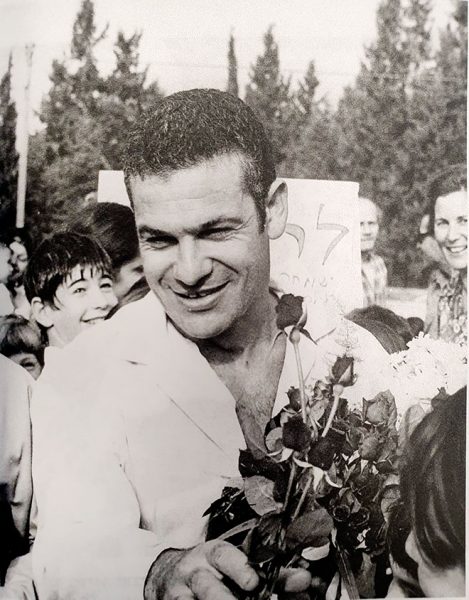
Not only was this the most successful of the dozens of books Lieblich wrote – it was even translated into English – she claims this was the book that most deeply affected her personally, and she attributes much of it to Harpaz’s life philosophy. This can be seen in Lieblich’s decision to establish a discourse group that meets annually to discuss the topic of death, and her book Café Mavet (“Café Death”), which came out in 2019. This group conducts itself much like the group in captivity, with a different member leading the discussion every time on a rotational basis.

After the terrible events of October 7, when many people were taken hostage by Hamas and held in captivity in Gaza, journalists turned to Lieblich, asking to interview her on the psychological state of the hostages – both those that were eventually freed, as well as those still being held hostage by Hamas. She refused.
Amia agreed to speak with us about past cases involving former captives and made it very clear that “there is no similarity at all between captivity then and captivity now: those were soldiers and these are civilians, then it was a sovereign state subject to international law and now it is not, then the Red Cross was involved and here they are not. And these are just a few examples.”
Still, when asked what she would say if she encountered someone released from Hamas captivity, and what she could offer them from her own experience of speaking to those freed after the War of Attrition, she gave a very clear response:
“Those who underwent terrible things and returned – they should tell their story. Let someone write it up. Letting experiences out, not necessarily in therapy, perhaps alongside it, is meaningful, it helps. I saw it with the captives of the War of Attrition.”
The Children Waiting at Home
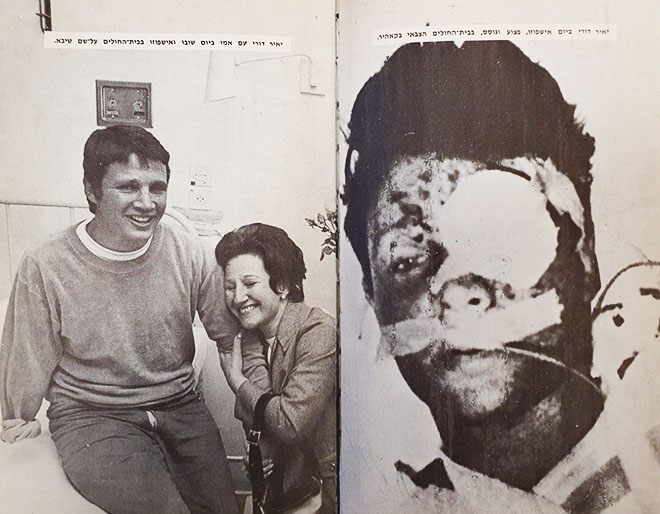
In difficult situations, sometimes a very human and understandable need arises for a third, outside person, who isn’t family, to intervene and help someone open up and tell their story. Sometimes it takes this type of external figure to help unload and overcome feelings of embarrassment, shame, and guilt, as well as any sense of distance that can form between those who have returned from captivity and their relatives, due to the lengthy period of separation.
Yitzhak (Jeff) Peer is another former pilot. He was also among the group of ten captives interviewed by Lieblich. He was one of those who used Lieblich’s work as an aid that helped him tell his family what he went through in captivity. Jeff was born in the United States and made Aliyah at age 14. He played a significant role in putting together the famous translation of The Hobbit into Hebrew. After returning from captivity, he moved back to to the United States and became a test pilot. Lieblich flew to meet him there:
“He asked me if his 17-year-old daughter could join the interviews I conducted with him. I said of course, and then I realized that this was the first time she was hearing from him about his experiences in captivity. Before this, he simply couldn’t tell her. It was precisely this framework of an interview for a book that helped them become closer. It was a rare opportunity for both of them.”
The children of these captives did not find it easy to overcome the absence of a missing father during the period of captivity. Dalia Harpaz was one of the twins born to Rami while he was being held in Egypt. They only first met each other when she was three and a half years old. In conversation with her, she said that because her father was absent during the critical early childhood phase of bonding between parents and children, she never really managed to truly believe and internalize that Rami was indeed her father.
Over the years and after growing up, their connection strengthened, but something fundamental was always missing. As an adult, Dalia stresses that she never lacked for anything. She describes her father as an incredible person, a good-hearted man who was a source of inspiration for her in how he faced adversity.

Towards the end of his life, while struggling with Parkinson’s, Rami wrote a book with his wife entitled Letters From Captivity: The Israeli Pilot and his Wife. The book is a dialogue between the two of them about the long stretch of captivity, in which they describe the difficulties and small victories along the way.
Dalia tells of how the books on her father’s time in captivity sparked a conversation between the two of them on the subject, which was hardly discussed beforehand at home:
“Until I read Chutz Mitziporim [Seasons of Captivity], I didn’t know what my father went through! And until I read the drafts for the book he wrote with my mother – I didn’t know what she went through, these were really new revelations for me – her heroism, the pressures she experienced, the difficulty in raising girls alone and maintaining hope, the dreams she had that were shattered.”
“Captivity doesn’t pass”
Giora Romm, a pilot who fell captive in 1969 and returned home before Rami Harpaz and his comrades were taken captive, eventually published his book, Solitary: The Crash, Captivity and Comeback of an Ace Fighter Pilot. He only got around to writing it when he was in his sixties, after having served in a number of public roles.
In the book, Romm wrote about the four months he spent in captivity. Getting back to normal life was not simple, but he was determined – he wanted to live. The book also describes these challenges – the difficulties of life after captivity.
A year after he returned from Egypt, Romm was back flying a fighter jet. When he flew over the Nile Delta, the region where he’d been shot down two years previously, he experienced uncontrollable shaking, extreme dryness in the mouth, and a rapid heart rate.
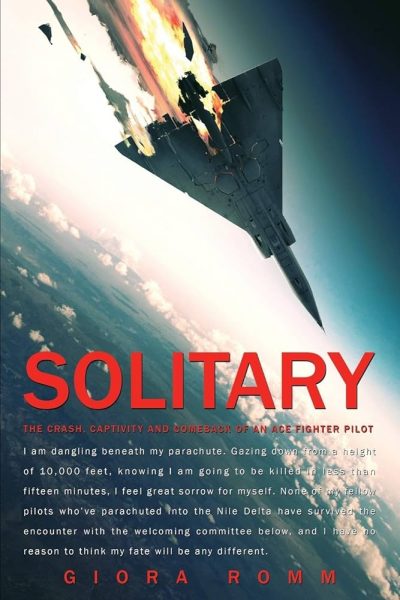
Rom passed away in August 2023, after years of service in both the Air Force, which he left with the rank of Major General, and the public sector. Neta Gurevitch, his daughter, was born some two years after he returned from captivity. When we spoke with her, she stressed that although her father lived a full and fruitful life after returning from captivity, and would invest in and be present for her, traces of that time in captivity remained with him: “captivity doesn’t pass. The captive spends their whole life trying to integrate that experience into the rest of their life.”

When she says “Literature is dear to my heart because it is a tool which allows one to undergo the experience of another and internalize it,” it seems to me that she is mostly talking about the life story of her beloved father.
As far as Neta is concerned, the book her father wrote can help us during these difficult days, when we pray for the safe return of all the hostages:
“This book is testament to the fact that you can recover from this thing. There is life afterwards. There is life with meaning afterwards, with all the difficulties along the way. Maybe if people read it, they will connect with that place of hope.”


