The Viral Nature of Anti-Semitic Imagery

The Dreyfus Affair that divided France and risked the Republic is not just the story of the sham trials, it is the story of the first viral hate campaign of images in mass media brining to the surface the most ancient of hatreds in a brand new way.

While anti-Semitic imagery and iconography has existed and was promulgated for centuries, it was the eruption of the daily newspaper and the popularity of the postcard in the mid-19th century that enabled the dissemination of the images faster than ever before.

The Dreyfus Affair that brought to the surface the division of France is not just the story of the sham trials and Emil Zola’s “J’Accuse”; it is also an example of one of the first image campaigns in the press, instigated by Zola’s famous publication.

“J’Accuse” hit the papers on January 13th, 1898, in L’Aurure, the famously Dreyfusard publication, at the height of the Dreyfus Affair. It is arguably Zola’s most famous piece of writing, fiction or non-fiction. However, it initiated what might be termed in contemporary language the first viral campaign. A war of images regarding Alfred Dreyfus as either  innocent or traitor, human or monster, was battled between newspapers that had a wider distribution than ever before.

While Zola and his Dreyfusard allies were caricatured by the anti-Dreyfusards, the truly vicious images were of Alfred Dreyfus himself. The anti-Semitic depictions published by La Libre Parole in a series named the Museum of Horrors showcased Dreyfus as a snake, to give but one example. The series was published during Alfred Dreyfus’ new court-martial in 1898, and the caricatures were clearly aimed at all French Jews whoever they were.

“History of a Traitor”, 1899 Central Archive for the History of the Jewish People, Jerusalem, F/261
“History of an Innocent”, 1898 National Library of Israel

The so-called viral nature of the image exchange indicates how close to the surface the hatred towards Jews had bubbled during that period of time. The blunt racism and anti-Semitism depicted in the caricatures published at the time threatened to destabilize the state, using the Jews as a tool of division by the right as a perfect scapegoat.

“Dreyfus is a Traitor” November 1898 Musée d’art et d’histoire du Judaïsme, Paris

It was a golden age of caricatures. This art converged along with the daily newspaper and the Dreyfus Affair. It enabled the slew of images of hate aimed towards a minority to be engaging, entertaining, and viral. The idea spread to other European countries, all the way to the United States.

The stereotypes and canards perpetuated in the caricatures drew from both the antiquated ideas of Jewish usury and greed, but also modern ideas of conspiracy, as well as industry domination and control, which had been made popular by the publication of “The Protocols of the Elders of Zion”. Those ideas rose in prominence through the publication of caricatures showcasing Jews attempting to disguise themselves as non-Jews, Jews being portrayed as world dominators, and manipulators of finance and politics.

Caricatures of Jews committing election fraud from “Hatemail: Anti-Semitism on Picture Postcards”

This article was written with the help of Dr. Betty Halpern-Guedj from the Library Collections.

Information for the articles was gathered from Dreyfus and Zola: A Moment in the Conscience of the World, Dryfus: The History of a Jewish-French Family, and Hatemail: Anti-Semitism on Picture Postcards.


The Jewish Soldiers of the Kaiser’s Army

12,000 Jews were killed in action serving the German Army in the First World War, but Jewish loyalty to Germany was always doubted and questioned.

Jewish soldiers in the German Army celebrate Hanukkah on the Eastern Front, 1916. Photo: Jewish Museum Frankfurt, S. Ajnwojner Collection

Many countries and nations found themselves fighting against each other during the First World War. Spread throughout these countries and nations were the Jews, citizens of their particular locales; they participated in combat and could be found fighting in the various armies throughout the Great War. Jews have always been minorities in their various countries of origin, yet their percentage in the nation’s armies was always higher than their percentage in the general population. In the same token, their efforts in the war were also greater.

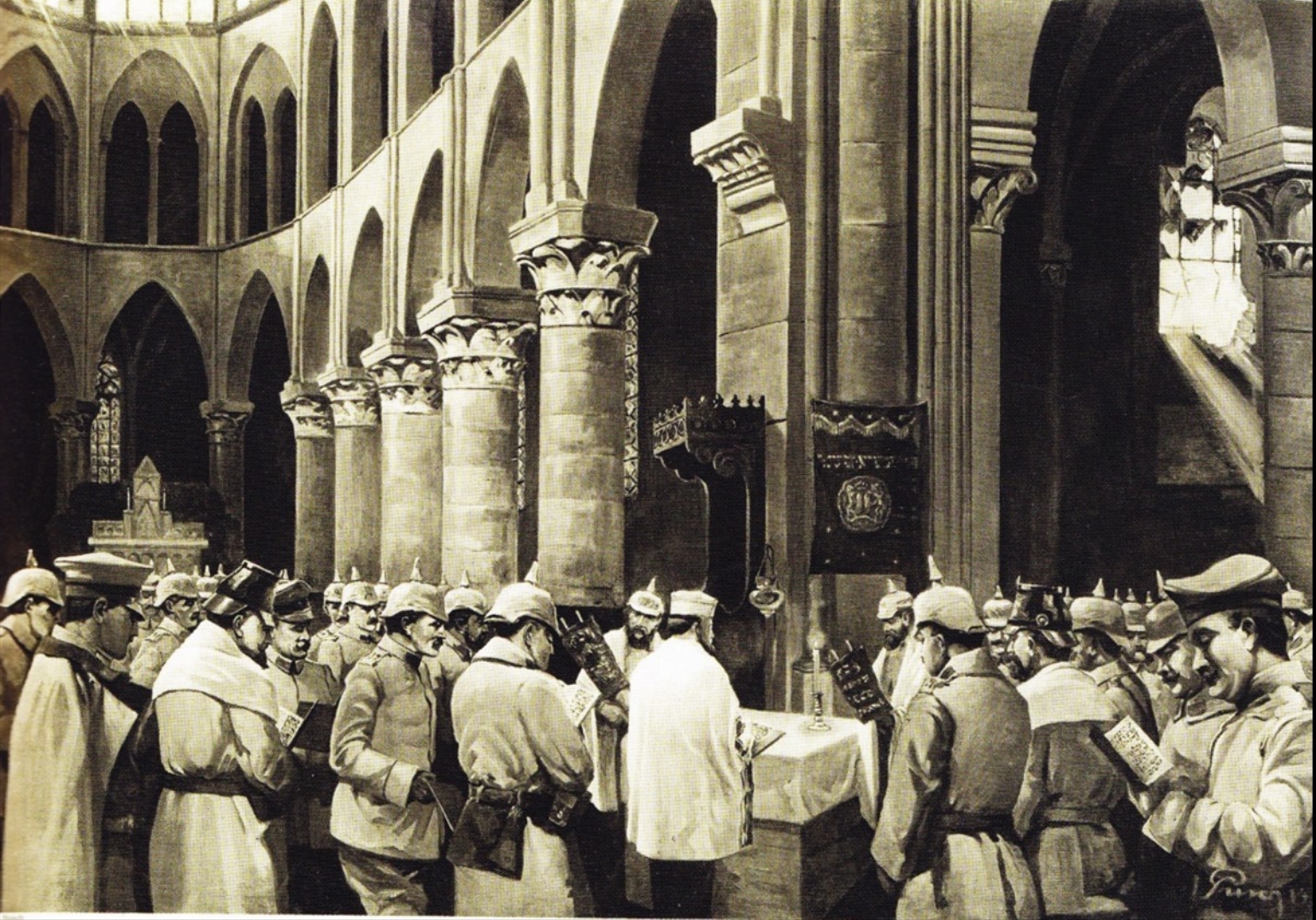
German Jewish Soldiers in a Catholic Church in Northern France, Yom Kippur, 1914

Due to the fact that historically the Jewish people were a nation among many, Jews often found themselves in the absurd and tragic situation of fighting each other on opposite sides of the fence. A Jewish soldier would be standing in front of the opposing force, not knowing that a Jewish brother would be an enemy as well. Legends surrounding the meeting of fellow Jews on the battlefield emerged.

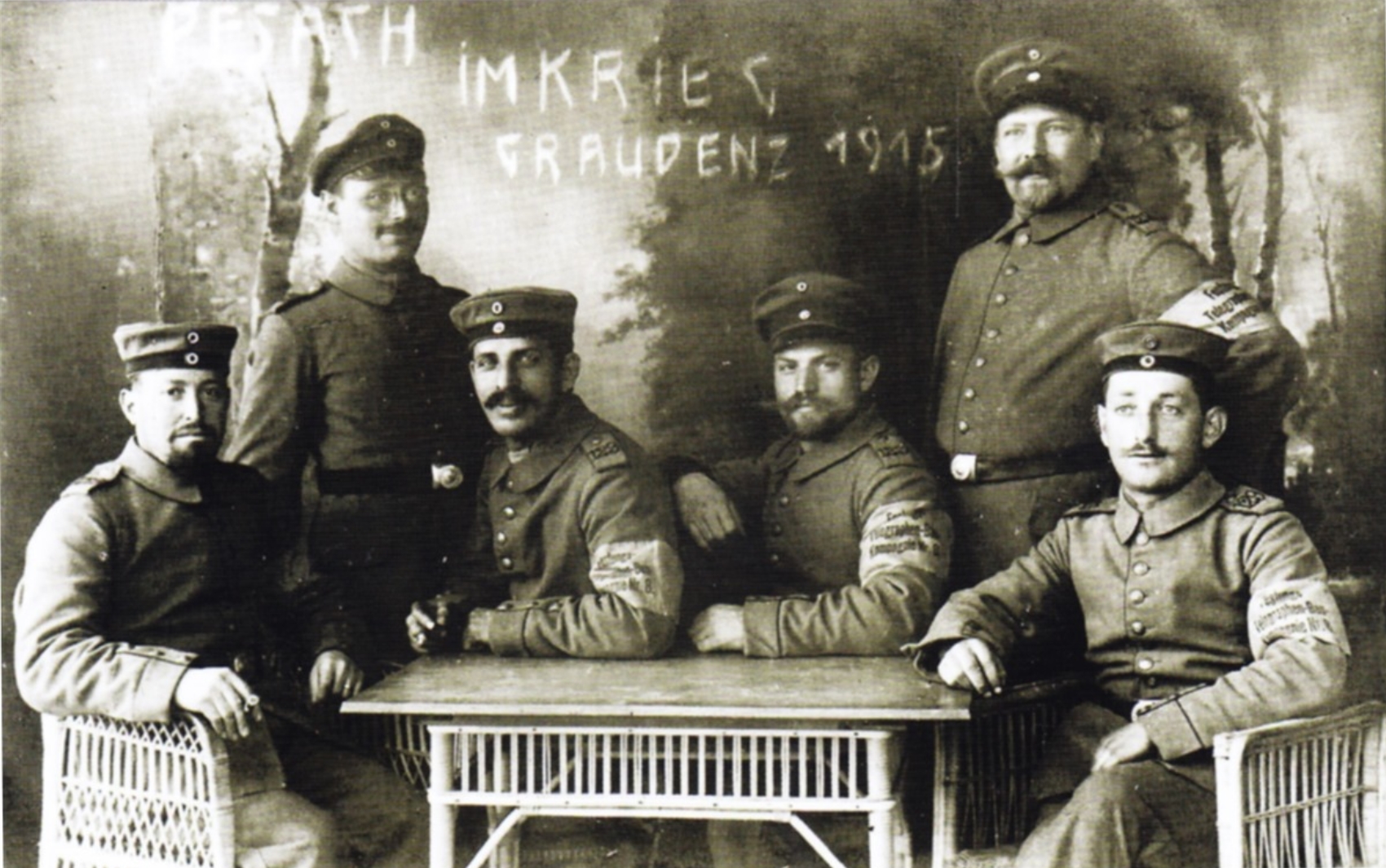
Jewish Soldiers in the German Army Radio Unit, 1915

In hand-to-hand combat, Jews were known to cry the “Shema”, which notified an enemy combatant who also happened to be Jewish that their enemy was a brother, and so he would avoid a killing blow. When killing could not be avoided, the utterance of the “Shema” more than once made sure that Jewish enemy soldiers found comfort in each other in death.

A prayer Siddur for Jewish soldiers, Berlin, 1914

The First World War was not the first armed conflict in which Jews fought beside their gentile compatriots, while their enemies included fellow Jews. In the century that preceded the First World War, Jews fought in the armies of kingdoms and Empires from all over Europe. In the New World, Jews could be found fighting for the North and the South during the American Civil War.

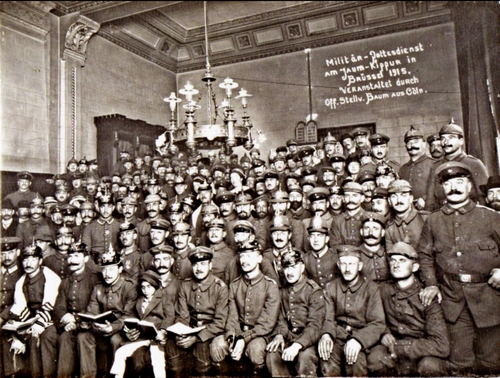
German Jewish Soldiers during a Yom Kippur prayer in Brussels, 1915

The Jews of Germany were quick to enlist in the army of the Kaiser, just as their French and English brothers enlisted in their armies. Almost 20% of German Jewry enlisted. Due to the tension between the anti-Semitic and the more liberal attitudes that German society held towards the Jewish people, many German Jews saw the First World War as an opportunity to prove their love and loyalty to their German homeland.

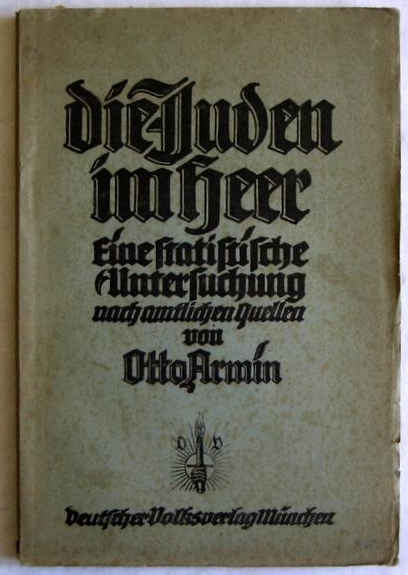
But very quickly anti-Semitic rumors spread about the Jews’ lack of patriotism and their low enlistment numbers. In October 1916, the German Military High Command announced a Judenzählung, “A Jewish Count”, to find out and report if the claims were true. The results of the report were never published and rumors continued unabated. It was in this atmosphere that Otto Armin (whose real name was Alfred Roth) published the so-called report and its results, claiming it proved that Jews avoided enlistment.

Anti-Semitic poster: The Jewish soldier “the last to charge, the first to head home.”

But the anti-Semitic language of the publication reveals Otto Armin’s slanderous intent.

The cover of Otto Armin’s anti-Semitic book “The Jews in the Army”, published in 1919

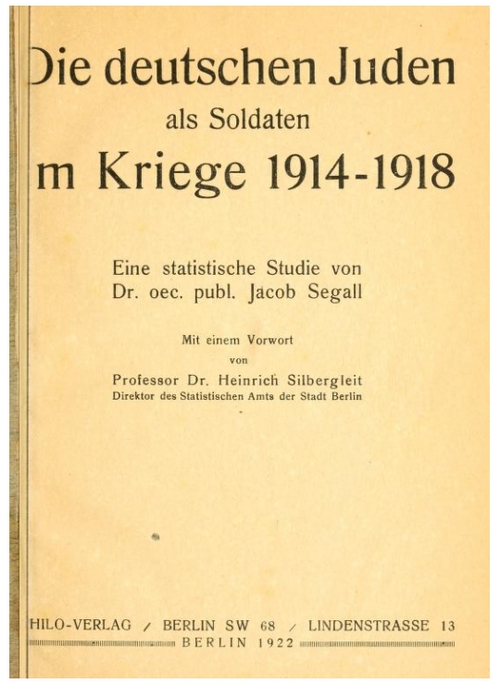
Jews did not remain silent in light of this libel, and Dr. Jacob Segall published a book loaded with facts and figures regarding the Jewish soldiers of the German Army, going into great detail regarding their feats during the war.

The cover of Dr. Jacob Segall’s book “The German Jews as Soldiers in the War of 1914-1918, a Statistical Analysis.” Published in 1922

Some 100,000 Jews served in the German Army throughout the First World War. 12,000 were killed in action, and no less than 35,000 received medals and accolades.

A German poster in memory of the 12,000 Jewish soldiers that were killed in action

Despite all that, the rumors and doubt regarding the German Jewish contribution to the War effort never really died down and was an essential part of Nazi propaganda, years before the Nazis took over Germany.

1695: What Is Missing from the Young German’s Medical Diploma?

It is unusually beautiful, but a small detail is missing from the diploma Capilius son of Yosef Piktor received.

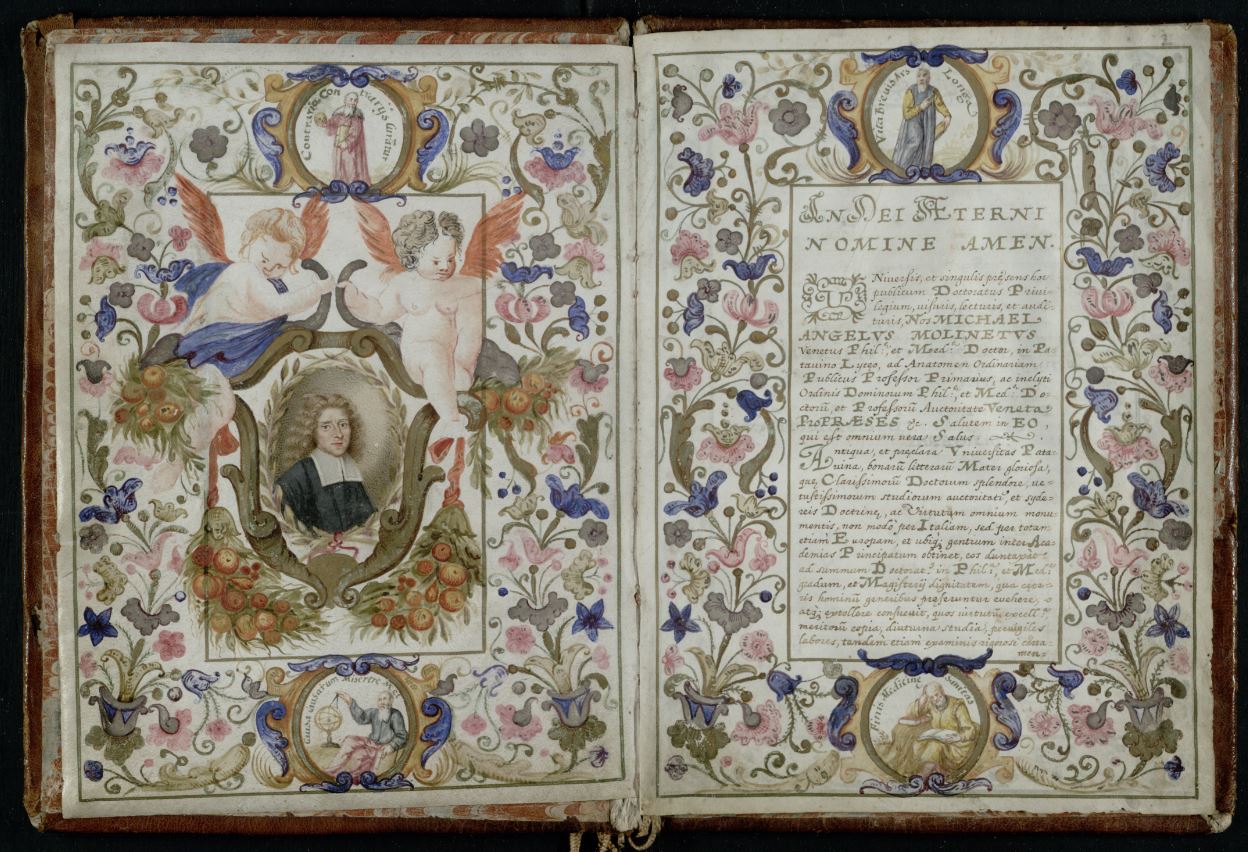
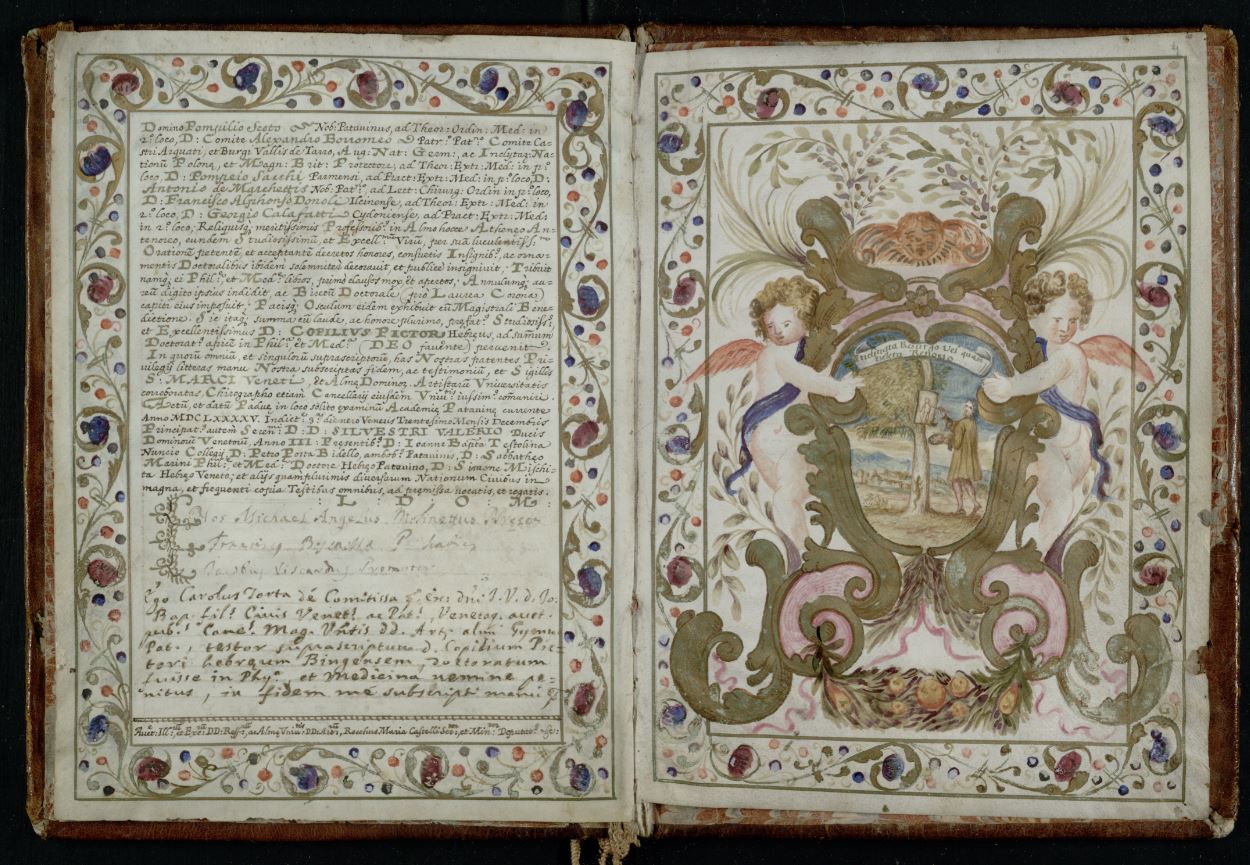
In 1695, Capilius son of Yosef Piktor completed his medical and philosophy studies (which was a general name for sciences at the time) in the Padua University in Italy. In December of that year he was awarded a certificate attesting to completion of his studies – a magnificent diploma formed like a booklet and comprised of three sheets of parchment illustrated and decorated with many colors and figures.

Apart from an illustration of Piktor’s birthplace (Bingen in Germany), the diploma is missing an important detail related to its recipient’s identity – the new doctor’s Jewish status. Even the name the doctor is mentioned by is simply a Christian-Latin name given to him – apparently in order to register for studies. His true name was Yaacov Mahler.


A portrait of the newly-certified doctor Yaacov son of Yosef Mahler

What was the reason behind this peculiar omission?

Testimonies from the fourth century CE onward reveal an interesting fact about Italian history: the presence of Jewish doctors. Specific Popes periodically forbid Jews from being accepted to study medicine in Italy, or prevented the Jewish doctors from treating Christian patients, but the presence of medically-educated Jews on the Italian Peninsula, or of Jews from various European communities (such as Mahler) who studied medicine in Italian universities, was a permanent fixture. The medical profession – every stereotypical Jewish mother’s dream – was one of the only professions available to Italian Jewry, despite requiring long years of education and training.

The dignified diploma Yaacov Mahler received reveals something about the ambivalence and perhaps even discomfort of the Christian majority when dealing with the existence of Jewish doctors in Italy: young Jews were permitted to study medicine and to work in it in their communities, but for as long as they studied in a Christian university – they must adopt a suitable Christian name and discard any external signs of their Judaism.


Yaacov Mahler’s full diploma. Click here to view the item in the Library catalog


`;