Most Jewish holidays have a fixed Hebrew date. Passover? 15th of Nisan. Sukkot? 15th of Tishrei. Yom Kippur? You’d better not forget the 10th of Tishrei.
But Shavuot? No date. None.
All we get is a cryptic instruction:
You shall count… from the morrow of the rest day… seven weeks… until… the fiftieth day
(Vayikra [Leviticus] 23:15-16).
Does “the rest day” – the Sabbath – mean the first day of Passover? Or just a regular Saturday? Something else entirely? The text doesn’t say. But this ambiguity sparked a fierce dispute during the Second Temple period – one that cut straight through the heart of the Jewish people.
According to the Talmud, the Sadducees read the verse literally: “the day after the rest day” meant Sunday, plain and simple. The Omer count began after a regular Sabbath, and Shavuot always fell on a Sunday.
The Pharisees (the early rabbinic sages), however, disagreed sharply. The “rest day” referred not to Saturday, but to the first day of Passover. So the count began on the next day – whatever weekday that happened to be.
But the disagreement ran much deeper. It wasn’t just a calendar quibble – it was a clash of priestly dynasties. On one side: the deposed Zadokite priests – the Sadducees. On the other: the Hasmoneans, the victorious family of Hanukkah fame, who had seized the High Priesthood without traditional lineage.
The sons of Zadok followed a fixed solar calendar, calculated and consistent. They called themselves the “Sons of Light,” guardians of the covenant. Their Hasmonean rivals – whom they saw as illegitimate – were labeled “Sons of Darkness,” breakers of the sacred pact. In Zadokite eyes, Shavuot was set in stone: “the Feast of Weeks,” “the Day of Testimony”. It spanned the cosmos, linking the creation of the world to the revelation at Sinai.
The Hasmoneans, by contrast, adopted a shifting lunar calendar. For them – and for the sages who succeeded them – both the Torah and the calendar were entrusted to human hands, rather than to the heavenly realm. No wonder the Zadokites saw them as a “wicked priesthood”.
What emerges is a fundamental clash of worldviews, played out through the question of when to celebrate Shavuot.
In the Zadokite vision, humans must conform to a transcendent cosmic order. The solar calendar reflects an eternal divine rhythm — immutable, sacred, and preordained. Time itself is cyclical and exact, independent of human input. The holidays, especially Shavuot, are not merely dates — they are cosmic anchors, woven into the very fabric of creation and covenant. Humanity’s role is to align with that order, to honor the divine oath, and to rest when the heavens decree.
In this worldview, nature, history, and community all participate in a fixed divine cycle. The human being is an integral part of this greater cosmic system — bound to a heavenly calendar. The covenant is supreme, and the time it governs is absolute truth.
In the second worldview, human beings are the measure of all things. For the Hasmoneans and the rabbinic sages, time wasn’t a cosmic constant — it was something shaped by people. It could be calculated, debated, adjusted. It was open to interpretation, to halakhic ruling, to communal decision. Humanity didn’t just follow divine time – it participated in defining it.
Shavuot – and even the Torah – were not seen as fixed in the heavens, but as outcomes of a living, evolving system of values, society, and law. In this world, the human being is central: the one who defines the meaning of sacred time, of covenant, of commandments.
A halakhic disagreement? Certainly.
A battle over the shape of Jewish time and life? No question.
It may sound like a technical debate over when to start counting the Omer — but it was anything but.
This was a fight over the calendar. Over who held the authority to interpret Torah. Over whether the Oral Law could even exist. In short, the Shavuot controversy was far more explosive than any modern debate over judicial reform.
What do you get when a holiday’s date isn’t written in the Torah, and there’s no agreement on how to calculate it?
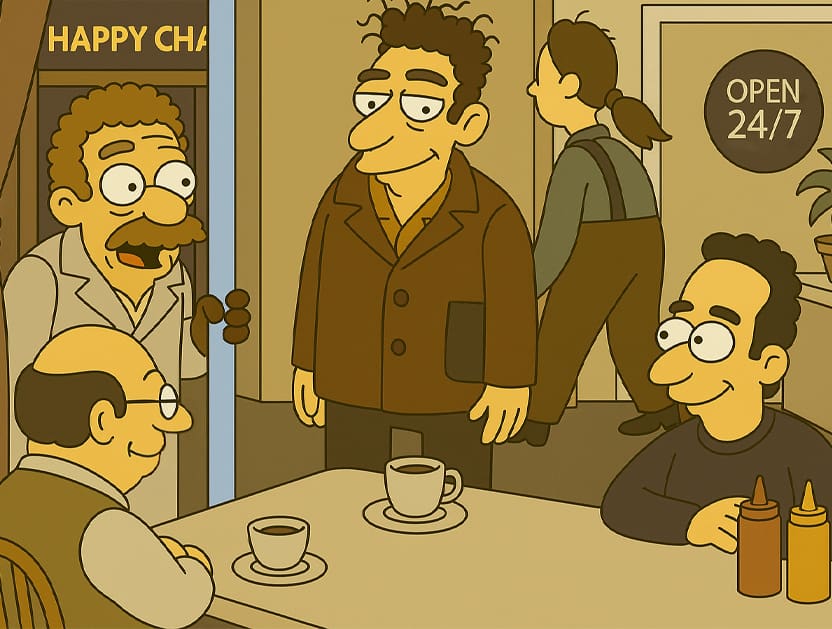
You get… Shavuot: The Biblical Festivus.
Festivus – the offbeat holiday invented by Frank Costanza of Seinfeld fame— had no Christmas tree, just a metal pole. No traditions, just grievances (“I’ve got a lot of problems with you people!”). No fixed date — just the desire to do things differently. (To give credit where it’s due: The holiday was originally dreamed up by the father of Seinfeld writer Dan O’Keefe.)
Likewise, Shavuot has no set date. No standout ritual object. No sukkah, no shofar, no matzah. So what does it have? A count. Ambiguity. A 2,000-year-old disagreement.
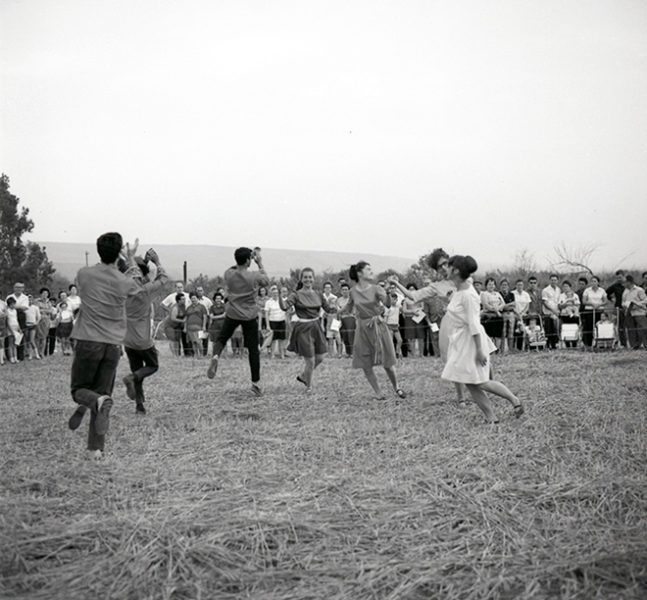
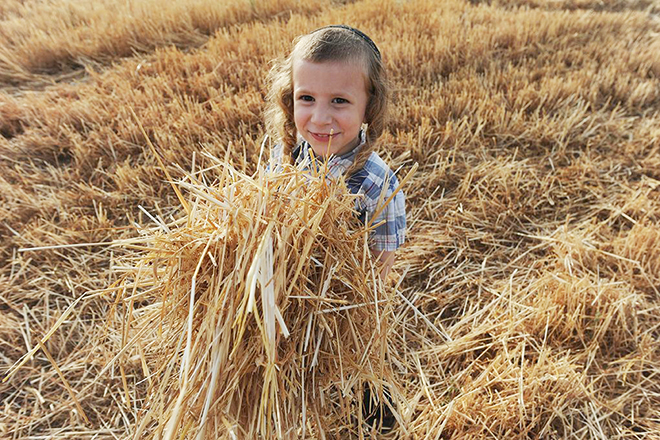
Ask many scholars, and they’ll tell you: Never mind the giving of the Torah at Mount Sinai — Shavuot was originally an agricultural celebration. A festival of farmers, watching their barley ripen and waiting for the wheat harvest to begin.

So what remains today?
Tikkun Leil Shavuot — a relatively late tradition. The Book of Ruth. Cheesecake. Water fights. And a historical echo of a holiday that was once a battle over how time itself is shaped. Shavuot is a deeply Jewish reminder that even something without a fixed date can become a defining moment. And sometimes, it’s the unanchored, unofficial, unscripted things – the ones no one quite agrees on – that move us most. And end up shifting the calendar itself.