
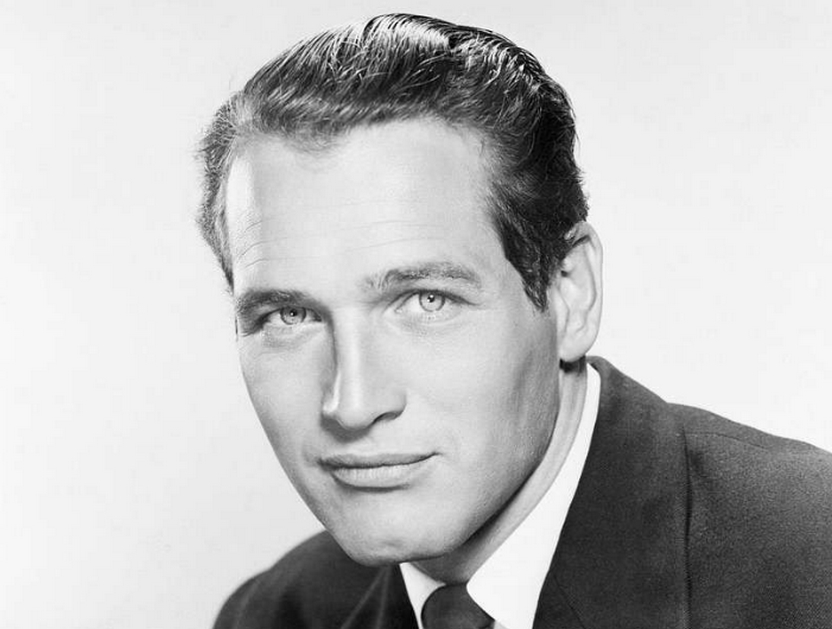
One afternoon in the mid-1990s, Adam Jed was playing pool at a summer camp in Ashford, Connecticut. Jed, then about 12 years old, faced a difficult shot, with the cue ball stuck amongst several other balls. In that situation, he’d have used a bridge, a small device to elevate and stabilize his stick over the balls to attempt a shot. He couldn’t find one in the room.
A man called out, “Hold on. I’ll be right back.” He returned a few minutes later brandishing a pool bridge he’d just fashioned himself, or had asked a carpenter to make, in the camp’s woodworking shop.
The man knew a thing or two about the sport from having starred in the films The Hustler and The Color of Money.
He was famed actor Paul Newman, who also played leading roles in Cat on a Hot Tin Roof, Hud, The Sting, Slap Shot, Absence of Malice, The Verdict and plenty more blockbuster films over a half-century-long career. Newman had founded the place, The Hole in the Wall Gang Camp — evoking the refuge in another of his memorable films, Butch Cassidy and the Sundance Kid — in 1988 as a retreat for children with chronic, sometimes terminal, conditions. Jed, who suffered from a blood infection that cost him parts of both legs and several fingers, attended a 10-day session each summer for a decade.
“He showed me what it was and how to use it,” Jed, a lawyer in Washington, D.C., said of the bridge Newman handed him. “It captures a lot about him.”

based on interviews and oral histories conducted by Stewart Stern,
New York: Alfred A. Knopf, 2022, available at the National Library of Israel
Newman was known worldwide for his strong performances, handsome looks and blue eyes, respected as an actor and swooned at by female fans. He earned an Academy Award as best actor in The Color of Money; raced cars professionally; and was married to his second wife, actress Joanne Woodward (now 95), for 50 years until his death in 2008.
Philanthropy is another significant aspect of the legacy of Newman. He founded a food company, Newman’s Own, in 1982, less to benefit himself — although its revenue from the sales of such products as salad dressing, lemonade, popcorn and spaghetti sauce, all featuring a sketch of Newman on the packaging, is nothing to sneeze at — than to yield profits to give away.
And Newman meant all of the profits, which still go towards an eponymous foundation that helps to fund the camps and contributes to other charitable organizations.
What began as one facility in Connecticut now encompasses 16 camps, known collectively as the SeriousFun Children’s Network: nine in the United States and seven abroad, including the Jordan River Village, located in northern Israel, just west of Tiberias.
The Connecticut operation alone has a $20 million annual budget, most of it raised from donors. In 2025, it provided 40,000 “healing experiences” to children and their families, a term that Jimmy Canton, Hole in the Wall’s chief executive officer, said includes the camp, home visits, programs for healthy siblings, bereavement sessions for parents and alumni events. Approximately 1,000 children annually attend the camp’s summer sessions and 1,500 children and their relatives attend the autumn and spring sessions, he said.
Newman’s friend David Horvitz, who served on Hole in the Wall’s board of directors, said he tried bringing Newman to Israel in the early 2000s to see the Jordan River camp, which Newman had endowed with $1 million. That trip didn’t transpire.

Horvitz thinks Newman’s only visit to Israel was in 1959–1960 to film Exodus, a fictionalized account of the state’s founding. Newman told him he’d brought Woodward and one of their daughters and most enjoyed two experiences while in Israel: the food and motorcycling around Haifa late at night.

Newman was raised Jewish in Cleveland, but told Horvitz that Abba Hillel Silver, the family’s rabbi at The Temple Tifereth-Israel, wouldn’t allow Newman and his brother, Arthur, to have a bar mitzvah because their mother was not Jewish.
Newman explained in conversations that he founded the camp in gratitude for his good fortune in life. He would often say that being born with features deemed handsome may have made his career, but that coincidence was as random as a child being afflicted with a terminal illness.
“I wanted, I think, to acknowledge luck: the chance of it, the benevolence of it in my life and the brutality of it in the lives of others, made especially savage for children because they may not be allowed the good fortune of a lifetime to correct it,” Newman wrote in the introduction to I Will Sing Life, a 1992 book about the camp.
Said Horvitz: “He never thought he was a good actor. He knew he was gorgeous. He felt a responsibility.”

“He wanted to create a space where people who were dealt a terrible hand could forget for a brief time,” said Canton, who began working at the camp as a counselor 38 years ago. “He was a great human being, a great man. Whatever influence he had, he wanted to use it for good. It was the purity, the goodness, of who he was. … It was the humility of that great man to realize how lucky he was, and the desire to pay it forward.”
Jed, Horvitz and Canton said they often noticed Newman in simple moments, blending in easily among children clueless of his celebrity. That’s how Newman preferred it — “He had not a shred of founders’ syndrome,” Canton said. He was just the older man with folded eyeglasses hanging from his buttoned polo shirt who’d take out a boat to fish on the camp’s lake and bring a child or two along. He’d perform in skits with kids; Newman made sure each camp included a theater because he believed performing to be therapeutic, Horvitz said. Canton remembered a boy with a terminal illness telling Newman, “I’m glad I had cancer so I could come here.” A stunned Newman could just shake his head.

Horvitz said he’s unsure why Newman was drawn to suffering children but suggested that guilt might’ve been at play.
“He had six children: five girls and a boy,” Horvitz said; Scott Newman died at 28 of a drug overdose. “He felt he was a lousy father. He was away a lot.”
Two of Newman’s daughters, Lissie and Clea, are involved in the Connecticut camp and the network.
Newman and Woodward were honored in 1992 at the Kennedy Center, in Washington, D.C. Unbeknownst to them, several campers were brought in to entertain.
As Jed went on-stage, actress Sally Field gave him a kiss of encouragement.
He said he’s gratified to have given back to Newman that night.
“How cool was it,” Jed said, “to be able to perform for a famous performer who’d done so much for me and so many other children?”
Newman is honored at the camp daily, although he’d likely have put the kibosh on it were he still alive.
This is what campers chant before most meals:
This camp’s been good to me.
This camp’s been good to me.
So thank you, Paul,
For the Hole in the Wall.
This camp’s been good to me.
Writer-editor Hillel Kuttler can be reached at hk@HillelTheScribeCommunications.com.


