The scene is Lisbon, Europe’s westernmost capital.
The time: the closing years of the 15th century, the final moments of the “old world.”
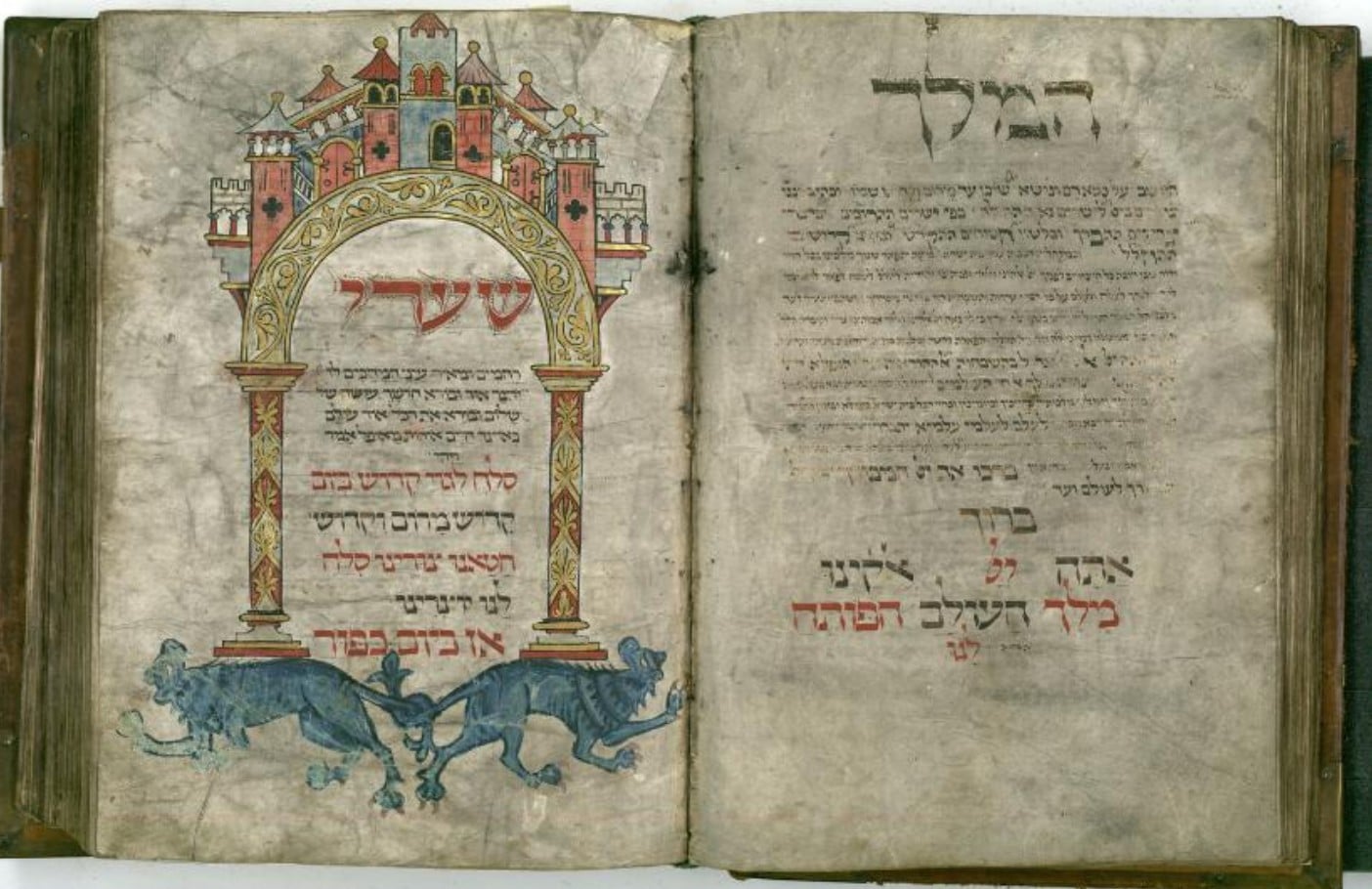
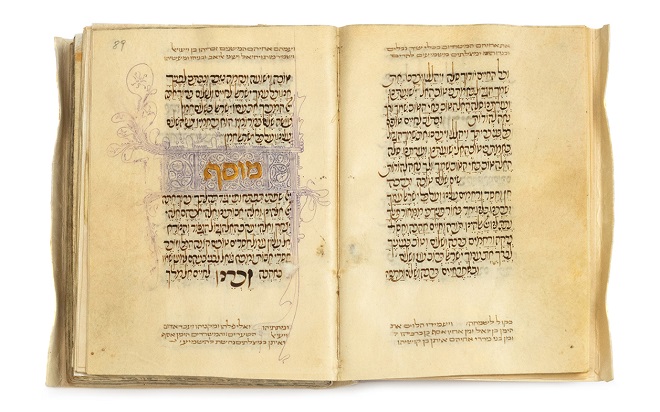
In a small workshop deep inside Lisbon’s Judiaria, the Jewish quarter, a craftsman bends over his work. With a steady hand, he delicately illuminates the parchment before him. Ancient Hebrew letters, so distant from the everyday language of the land around him, gleam with gold and are adorned with tiny purple leaves. Patiently, he embellishes the words “Rosh Hashanah,” followed by the heading of the Musaf prayer.
By the century’s end, Lisbon stood at the threshold of its golden age. Known as the “City of Seven Hills,” the capital’s neighborhoods and houses tumbled down the slopes between its royal walls and the wide estuary where the great harbor opened to the Atlantic. That port – already the source of the city’s prosperity – would, within a few decades and following the discovery of the Americas, help transform Portugal into one of the great powers of the era.
But for one community within the city, history was turning in the opposite direction. Their golden age was about to end – or rather, to be cut short with shocking cruelty, fueled by a tightening web of political ambition, economic interests, and religious zealotry.
Lisbon’s Jews were about to lose everything.
They had lived in the city for centuries. The earliest known reference to them appears in a 1175 document from the archive of the Alcobaça Monastery, which mentions the “Judiaria of the Jews” – a designated quarter where Jews lived and worked. From then on, the community flourished. The first Christian kings of Portugal, after conquering the land from Muslim rule, formally recognized the Jewish comuna – an organized and legally sanctioned community, with institutions and leaders operating under royal protection. Impressive synagogues were erected, and as time passed the community’s living space expanded, with new Jewish quarters established in Lisbon’s growing neighborhoods. Jewish merchants became pillars of the city’s maritime trade, while scholars and community leaders sometimes rose to senior positions in government.
And yet, Lisbon’s Jews remained a relatively small community – the younger sibling, so to speak, of the large and illustrious Jewish population across the border in Spain.
That, however, was about to change. In the final decade of the 15th century, Spain’s Jews suffered their greatest calamity: Ferdinand and Isabella, the Catholic monarchs, signed the infamous decree ordering their expulsion. That vast, celebrated community was obliterated in an instant, its members forced to leave their homeland or convert and vanish into the local population.
King João II of Portugal quickly recognized the opportunity hidden within the crisis – both for himself and for his realm. The Jews expelled from Spain were famed for their commercial skills and their far-reaching trade networks, stretching across the Mediterranean and beyond the ocean. He allowed tens of thousands of these refugees to settle in Portugal, well aware of the benefits they would bring to the kingdom’s growing economy. At the same time, he exploited their desperation, exacting staggering sums in exchange for the “privilege” of refuge.
Within months, Lisbon’s long-established Jewish community had doubled, even tripled in size.
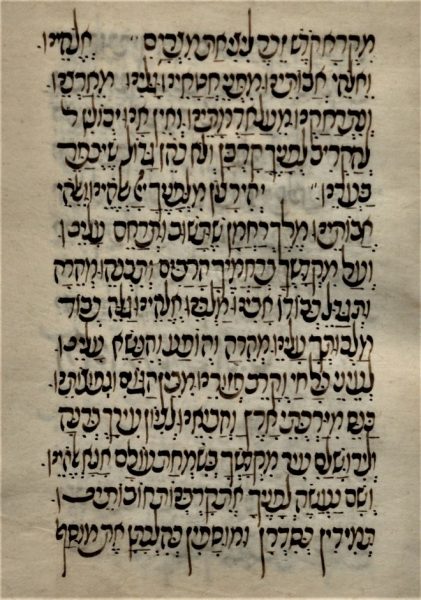
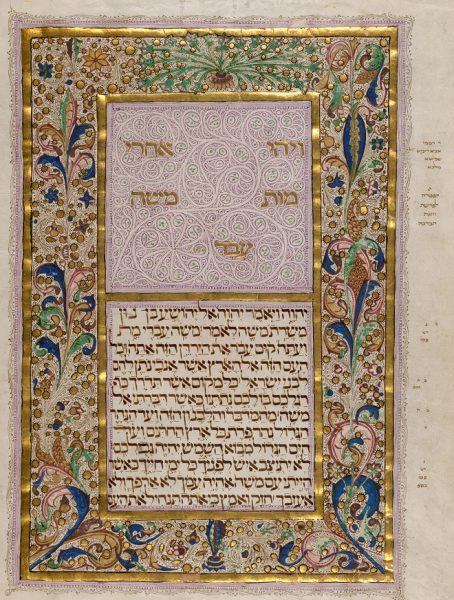
Even before the arrival of the exiles from Spain, Lisbon was already home to a flourishing artistic movement later known to scholars as the “Lisbon School.” From modest workshops dedicated to copying and illuminating Jewish manuscripts emerged creations of rare beauty and originality. Around thirty surviving manuscripts have been attributed to this school, each bearing its distinctive calligraphic and artistic style. Jewish-Portuguese artisans drew inspiration from the layered culture around them, blending elements from diverse historical traditions into works of striking brilliance.
The best-known product of this school is the “Lisbon Bible”: three breathtaking volumes containing all 24 books of the Hebrew Bible, written by the scribe Samuel ben Samuel Ibn Musa. Today, this treasure is preserved in the British Library.
And yet, dark clouds were already gathering over the future of these workshops.
Did the community’s members, both the old residents and the newly arrived exiles, sense what was to come? Did they fear the future, or did they trust that the crown’s economic interests would continue to shield them? Does the very fact that Jewish artists carried on, laboring with such devotion over manuscripts of unmatched beauty, reveal their confidence that disaster would not strike them, or their conviction that, whatever happened, the sanctity of the Scriptures had to be preserved in the most splendid form imaginable?
Whatever the answer, the golden age of Portuguese Jewry was about to come to a close, with a single stroke.
The cracks in the monarchy’s supposed “protection” appeared almost at once, even during João II’s reign. Restrictions tightened. Families were forced to pay vast sums to renew their right to remain in Lisbon. Countless Jewish children were seized, it seems, and forcibly shipped away to Portugal’s overseas colonies.
The situation worsened with João’s death. Having lost his only son in a riding accident, he left no heir, and the crown passed to his cousin, Manuel I. Determined to strengthen the ties between the Iberian monarchies, Manuel sought the hand of Isabella, daughter of none other than Ferdinand and Isabella – the monarchs who had expelled the Jews from Spain. But the proposed bride and her parents set one condition for the match: the complete expulsion of Portugal’s Jews, including the Spanish refugees who had so recently found shelter there.
King Manuel was hardly eager to carry out the expulsion – not out of compassion for the Jews, but for a practical reason: they and their vast trade networks were pillars of Portugal’s growing economy. To cast them out with a single decree was a dangerous gamble. His solution was as cynical as it was cruel: the forced baptism of thousands of families.
On paper, the edict gave Jews a choice – conversion or exile. In practice, the king chose for them. They were summoned to Lisbon’s central square, ostensibly to prepare for departure. There they were surrounded, while priests sprinkled baptismal water over them from the balconies above. Church law recognized no reversal of baptism: Once a person became Christian, there was no way back. With that, the possibility of voluntary exile was suddenly withdrawn.
Some Jews managed to escape, leaving all their possessions behind. Others, with no way out, remained. Thus were born the communities of the anusim: Jews who outwardly lived as Catholics, while secretly preserving fragments of their heritage – whispered prayers, candlelight hidden behind shuttered windows – at constant peril to their lives.
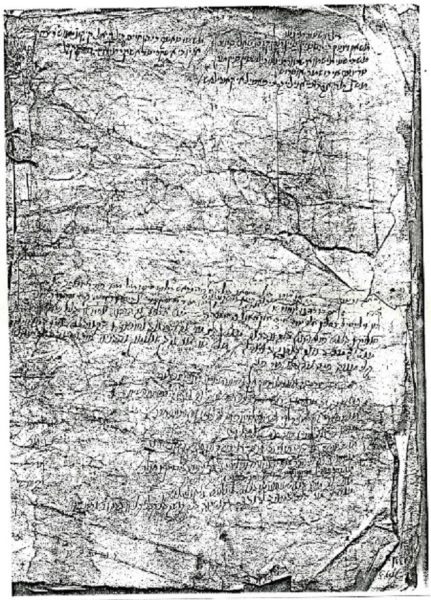
And what of the community’s manuscripts, those precious works of art and devotion? Most vanished. Of the few that survived, their paths are extremely difficult to trace. Some were likely smuggled out by refugees, others hidden by families who stayed, eluding the watchful eyes of the Inquisition, and some fell into foreign hands, preserved by chance for centuries.
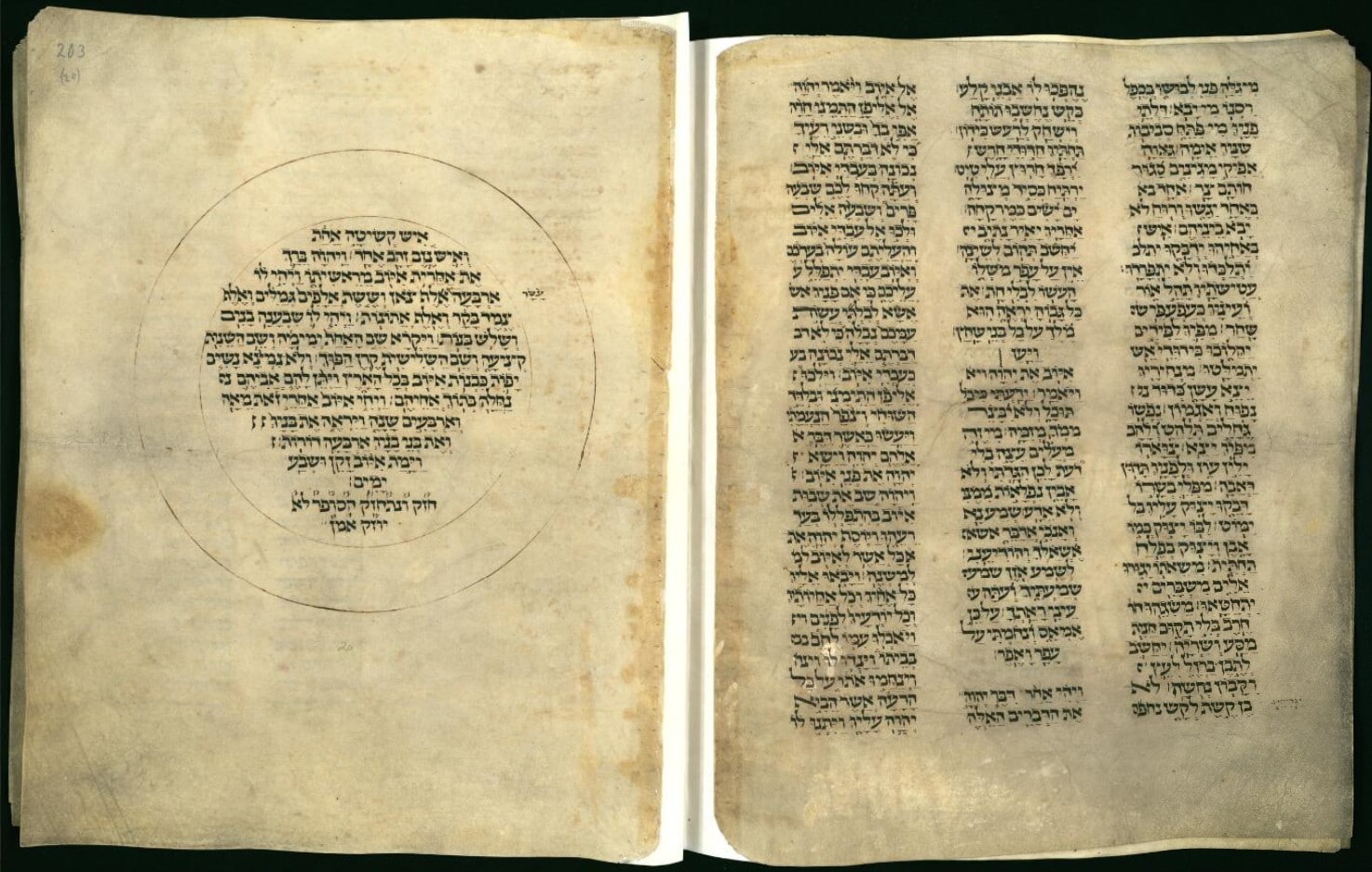
Now and then, one would resurface. Among them was the Lisbon Mahzor, which eventually reached the Jewish community of Aleppo, Syria, where it was guarded alongside the famed Aleppo Codex. This monumental prayer book, divided into three volumes, contained the entire cycle of Jewish liturgy: one volume with the daily prayers, and two others with the festival services for Rosh Hashanah and Yom Kippur.
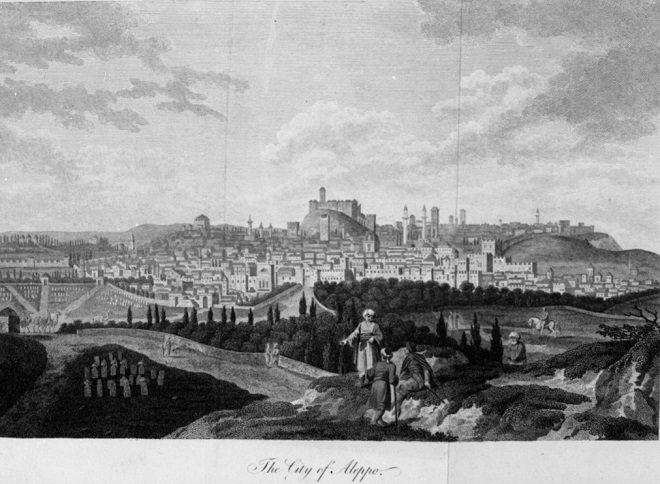
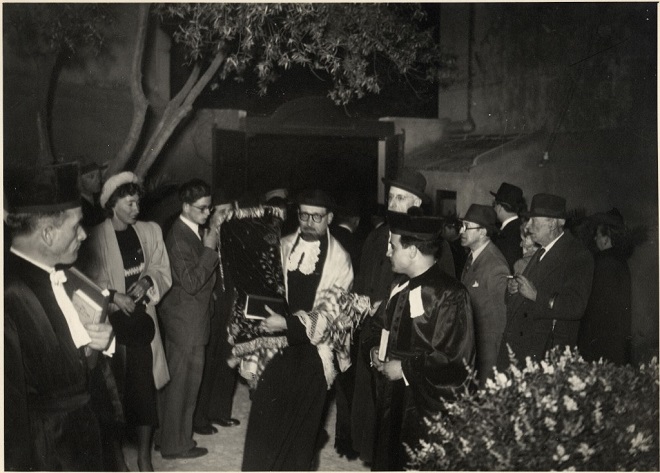
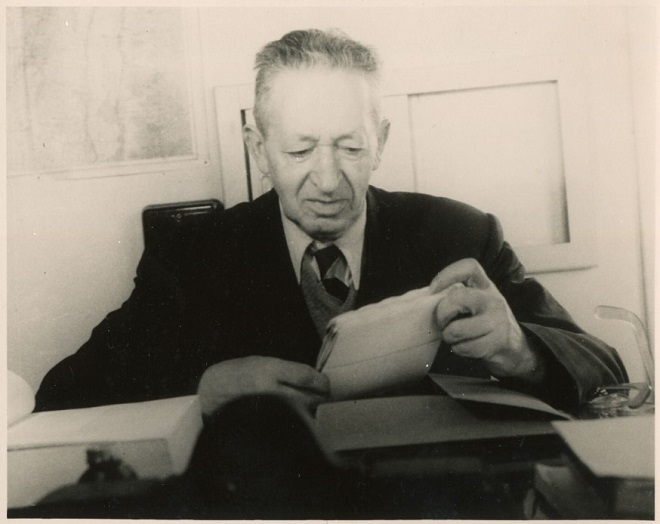
In 1957, the Lisbon Mahzor was brought to Jerusalem as a gift from the Aleppo community to Israeli President Yitzhak Ben-Zvi, and placed in the archives of Yad Ben-Zvi. Yet only a single volume was held there. The fate of the other two was shrouded in mystery. Had they also been held in Syria alongside the Aleppo Codex? Or had they taken another route altogether, never reaching Aleppo or Jerusalem at all?
What is certain is that a few months ago, the missing volumes appeared in the catalog of the Kedem Auction House. Recognizing their immense cultural and historical significance, the National Library of Israel immediately appealed to acquire them directly without public auction, as treasures belonging to the Jewish People. The purchase was made possible with support from the Haim and Hanna Solomon Judaica Foundation and the Zukier Family.
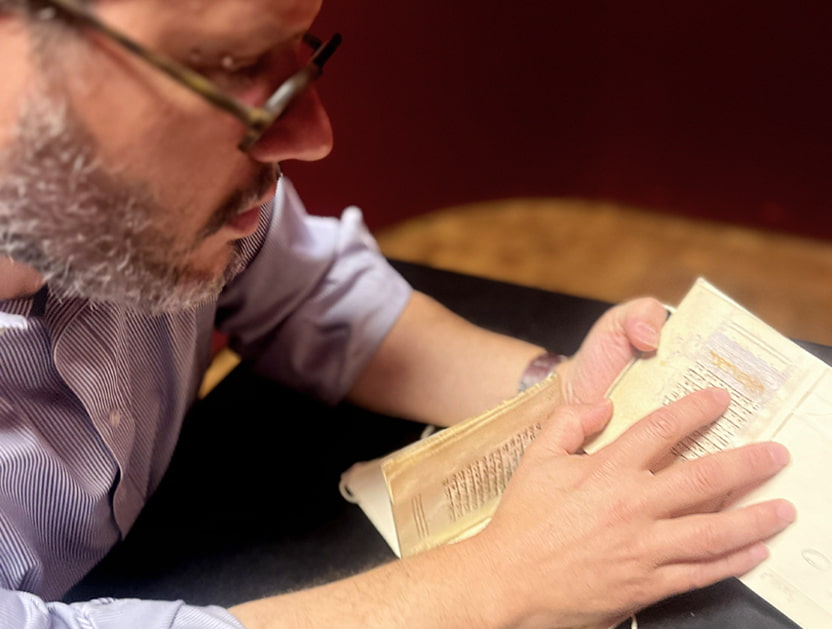
The return of the two missing volumes to the Library was an extremely moving occasion. They were quickly taken for conservation treatment, then photographed and digitized. Today, they are accessible online – digitally reunited with the first volume preserved at Yad Ben-Zvi.
Bring near our scattered [people] from among the nations, and gather our dispersed from the ends of the earth – Recited each year by Jews around the world, these words take on special resonance when written in elegant black calligraphy on yellowed parchment. For the Lisbon Mahzor – a book that traveled so far, along such a winding and perilous path, from its creation in Lisbon to its home in the National Library of Israel – those words embody both survival and return.