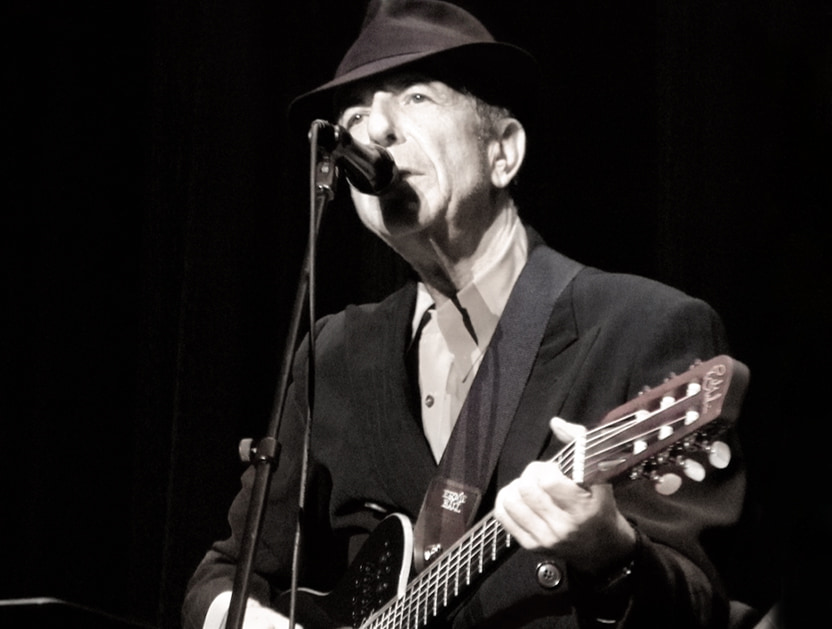
He looked unlike any other rock star as he stepped onto the stage at Glastonbury, the biggest music festival in the world. In a setting full of color and glitter, he was dressed in a neatly pressed gray suit and shirt. On his head was a gray fedora, shading his eyes, which remained half-closed as he sang.
Yet his deep voice resonated more powerfully than any shout.
He sang, calling out to the world: Hallelujah.
The crowd was electrified, held under his spell.
At first there was an almost sacred silence. Then the audience joined in, singing the familiar words with hands raised high. As the dramatic English sunset bathed the stage, they erupted in applause, not the restrained clapping of concert halls, but a jubilant mixture of whistles and shouts.
The 74-year-old singer removed his hat and bowed to the audience with quiet elegance.
The journey to that moment had been a long one.
Leonard Norman Cohen was born in the 1930s to an Orthodox Jewish family in Montreal, Canada. His parents gave him the Hebrew name Eliezer, Eliezer ben Nisan HaCohen.
He grew up in a comfortable and privileged environment that allowed him to explore and cultivate his passions: literature, poetry, and music. Did he dream of a career in music? He taught himself a bit of guitar and even formed a band in high school, but by his own account, he was a very mediocre player.
It was only in the early 1960s that he allowed someone else to teach him.
“I was visiting my mother’s house in Montreal”, he recalled during an acceptance speech for the Prince of Asturias Award, “Her house is beside a park and in the park there is a tennis court where many people come to watch the beautiful young tennis players enjoy their sport. I wandered back to this park which I’d known since my childhood, and there was a young man playing a guitar. He was playing a flamenco guitar, and he was surrounded by two or three girls and boys who were listening to him. I loved the way he played. There was something about the way he played that captured me. It was the way that I wanted to play and knew that I would never be able to play.”
After the Spanish guitarist’s impromptu performance, Cohen simply asked if he would be willing to teach him. They communicated in broken French, agreed on a price, and over the next three days the young Spaniard taught the Canadian poet, who was older than him, six guitar chords. On the fourth day, the guitarist did not come.
“I had the number of his, of his boarding house in Montreal. I phoned to find out why he had missed the appointment, and they told me that he had taken his life. That he committed suicide.
I knew nothing about the man. I did not know what part of Spain he came from. I did not know why he came to Montreal. I did not know why he stayed there. I did not know why he appeared there at that tennis court. I did not know why he took his life. I was deeply saddened, of course. But […] it was those six chords, it was that guitar pattern that has been the basis of all my songs and all my music.”
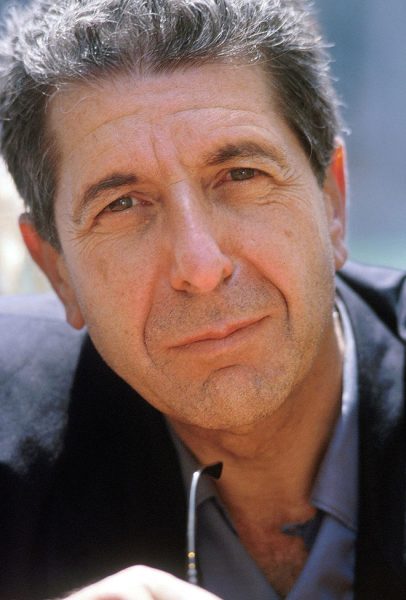
Meanwhile, regardless of his skill on the guitar, Cohen never stopped writing, especially poetry. Words captivated him long before melodies did. In high school, he studied with the poet Irving Layton, who greatly influenced him, and by the time he reached university, he was already writing seriously and winning literary awards.
He lived a fully secular life, but his Jewish identity was always present. It was not a religion he practiced to the letter, but rather a framework of ideas and values that became the foundation for his personal and distinctive spiritual journey.
On a practical level, he maintained a connection to his father’s community synagogue, where he learned to love prayer. He was proud of his family name and all its implications.
Alongside these deep roots, he possessed a curiosity and openness toward other spiritual worlds. From the beginning, his writing was strikingly universal. His first poetry collection was titled Let Us Compare Mythologies.
In the 1950s and 60s, Cohen published several volumes of poetry in quick succession, as well as two novels that received enthusiastic reviews in Canada.
He also composed music for some of his poems, but never dared to do much with it until he met folk singer Judy Collins. They met in New York, and he hesitantly asked if he could play her something, carefully qualifying his request: He explained that he didn’t sing or play very well, and he wasn’t sure if this was even really a song. Then he sat down at the piano, accompanied himself, and sang “Suzanne.”
“Listen,” she said firmly when he finished, “that is really a song, and I am going to record it. Tomorrow.”
It may not have been the very next day, but Collins did record the song and included it on her album In My Life. From then on, she did everything she could to push Cohen into the spotlight. On one occasion, she invited him to a fundraising evening where she herself was performing, and asked the audience to welcome “a writer, a poet, an author, and a wonderful friend.” Even she was not yet calling him a singer.
But when the thirty-something Cohen stepped on stage, fear froze him in place, and the out-of-tune strings on his guitar sealed the performance’s fate. In his deep, quiet voice he said, “I just can’t do it,” and walked offstage. The audience enjoyed this moment of vulnerability, but Collins refused to give up. Later that evening she brought him back onstage with her, and together they performed a kind of impromptu duet of “Suzanne,” marking the first time he had sung the song before a live audience.
Three weeks later, he was already in the studio recording.
In 1967, he arrived in New York, ready for a turning point in his career after failing to make a living as a writer in Canada. He was already 33, and found it hard to get New York agents to take him seriously or even listen. Most of them asked outright: Hey pal, aren’t you a bit too old for this?
Then someone introduced him to producer John Hammond, Columbia Records’ talent scout. “There’s this poet from Canada,” a particularly astute friend told Hammond. “He writes excellent songs, but he can’t read music, and he’s very odd. I don’t think Columbia will like him, but you might.”
And Hammond did. He liked Cohen’s unique style, his seriousness, and above all, the songs themselves. This was the start of a remarkable friendship, and of Cohen’s growing rapport with an audience that was beginning to know and appreciate him. His lyrics were sometimes dark, often melancholic, but carried a fine thread of subtle, sophisticated humor. Before long, his astonishingly deep and distinctive voice became his most striking hallmark.
Even if he still was not filling stadiums, an ever-growing audience eagerly devoured his songs, each of which was really a story in itself. One critic called them “cinematic songs.”
His muses were often more physical than spiritual – real women, flesh and blood, whom he drew close. Some shared long relationships with him, like Marianne Ihlen, whom he likely loved until his death, and Suzanne Elrod, the mother of his children. Others were brief, fleeting encounters, but almost every one inspired a song, or several.
Marianne on the sun-drenched shores of Hydra, Janis Joplin in the corridors of the Chelsea Hotel, Suzanne walking the streets of Old Montreal, and Angie in a Los Angeles studio – wherever he was, there was a woman who became a musical refrain, a lyric, or even an entire album.
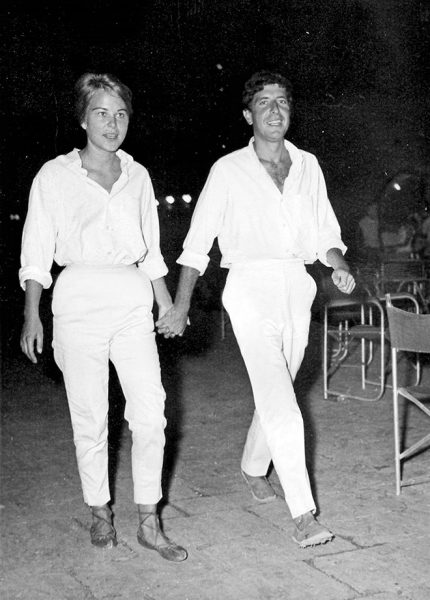
The way he gave voice to the feelings these women stirred in him led many to see him as a “high priest of love”, especially when that love was broken and full of pain.
His debut album, Songs of Leonard Cohen, was released in December 1967, earning only modest success in the United States (Americans were still struggling to embrace his overflowing sense of melancholy), but far greater success in Europe, where it quickly entered the music charts.
It was enough for him to want, and be able, to keep recording. Each subsequent album made him more and more famous as the years went on.
But then, just after his first wave of success, and precisely when he was working on the album that would include his most famous song, the American record company rejected it almost dismissively.
Cohen wrote Hallelujah over a period of years – seven or five, depending on whom you ask – but either way, it clearly was not a song that came easily. Entire notebooks filled with hundreds of draft verses piled up, and his frustration only grew.
“I remember being on the floor of the Royalton Hotel [in Manhattan], on the carpet in my underwear, banging my head on the floor saying ‘I can’t finish this song,’” he later recalled of the final stage in writing it. He did not believe he would ever manage to turn this work, which had tormented him for so long, into a song.
But he did.
It was 1984, and Cohen was fifty years old.
Columbia Records, however, rejected the album, Various Positions, featuring the song Hallelujah, with the rather presumptuous comment: “We know you’re great. We just don’t know if you’re any good.” In other words: We don’t believe you can reach enough of the American audience, or perhaps – we’re just tired of you.
Leonard Cohen did not give up, releasing the album through a small, little-known label. At first, hardly anyone heard the song, and certainly no one was particularly excited by it. Only when a cover version by John Cale was released, more than five years later, did it begin to gain popularity. Two more cover versions brought about its unprecedented spread (at least by Cohen’s standards at the time) around the world: Jeff Buckley’s version in 1994, and then Cale’s version returning to public attention after being included on the soundtrack of the animated film Shrek.
Years after it was written and recorded, Hallelujah became one of the most frequently played rock songs in the world, with hundreds (some say thousands) of cover versions. It appeared in numerous “songs of the decade” and “songs of the century” lists and rankings. Ironically, the cover versions made it into these lists more often than Cohen’s own recordings, even though he performed the song countless times in concert, changing some of the words and verses over the years.
How did a song by Leonard Cohen, the tortured and sophisticated troubadour, become one of the most famous songs in the world? Was it the title’s unmistakably religious association that captured the public’s imagination, or rather its erotic and romantic plea?
For although the word “Hallelujah” appears repeatedly throughout the song, and although it is full of religious motifs and references to biblical stories (especially those open to controversial interpretations, presenting a complex picture of morality and humanity), this is not a religious song.
Its original title, as it appears in Cohen’s notebook drafts, was The Other Hallelujah.
Cohen, who throughout his life traveled the world, not just in the physical sense but in the realm of ideas and the spirit, wanted to convey to those who had never experienced religious feelings, the elusive sensation expressed in this word of praise for the divine, hallelujah: that inner expansion, that moment when something stirs and calls to you from within.
The hundreds of drafts produced one of Cohen’s most personal songs, not necessarily because of the intimate references to the woman he was writing about. This is most clearly felt in the closing lines of the song, which did not appear in every version:
I did my best, it wasn’t much
I couldn’t feel, so I tried to touch
I’ve told the truth, I didn’t come to fool you
Throughout his life, before and after he became famous, in his greatest successes and in times of professional decline, when he was passionately in love and when he was desperately lonely and depressed, he was always in the midst of some spiritual search. That search gave his work a unique dimension.
Writing itself was, for him, the greatest experience of his life:
“Religion, teachers, women, drugs, the road, fame, money, nothing gets me high and offers relief from the suffering like blackening pages, writing.”
He wrote about the same experiences everyone wrote about: love and breakups, betrayal and meaningless relationships, pain, beauty, self-discovery, and loneliness. But he did so on a slightly different plane, often declaring, consciously or not, that he had no answers.
There is something greater, he felt and tried to make others feel, whether outside us or within us, and when we encounter it we are filled with that indescribable sensation that makes us cry out, whether we are believers or not, “Hallelujah!”
But what is that great “something”? “I didn’t come to fool you,” he sang.
You will have to find it for yourselves.
***
The closing event of the National Library’s Docutext Documentary Film Festival will take place on August 21, 2025. At its center will be a screening of the film Marianne & Leonard: Words of Love, which follows the love story of Leonard Cohen and Marianne Ihlen, his 1960s muse to whom he dedicated many of his songs, most famously So Long, Marianne. After the film, there will be a performance by Ivri Lider, who will sing the songs of Leonard Cohen, accompanied by the Israel Camerata Jerusalem.