
1579 was a big year for Simon Forman.
It was the year he began practicing magic.
As he later wrote in his diary:
“…this year I did prophesy the truth of many things which afterwards came to pass. The very spirits were subject unto me.”
At the time he was living on his own just outside of Salisbury, England. 26 years old, with a chip on his shoulder, struggling to make a living as a teacher, and beginning to dabble in medicine.
Forman was quite the character. From a modest background, he was at first unable to afford a top-grade education, but was driven by a life-long passion for acquiring knowledge of all sorts, especially scientific and occult knowledge.
By the early 1580s he had set up a practice as a physician, though he did not possess the proper license to do so. He had simply read a book on the subject. This earned Simon the ire of the College of Physicians, who hounded him for years and even placed Forman in a prison cell on more than one occasion. The constant undermining of his own credentials and knowledge led Forman to develop a bit of an inferiority complex, as well as a sense of resentment towards the establishment.
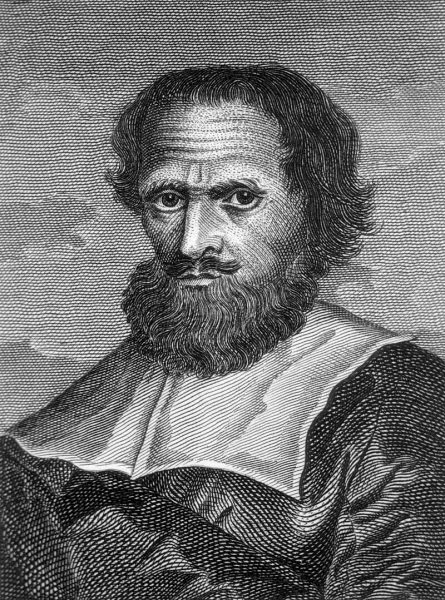
In 1588, another milestone:
“…this year I began to practice necromancy, and to call angels and spirits”.
A year later, he moved to London, where business began to pick up.
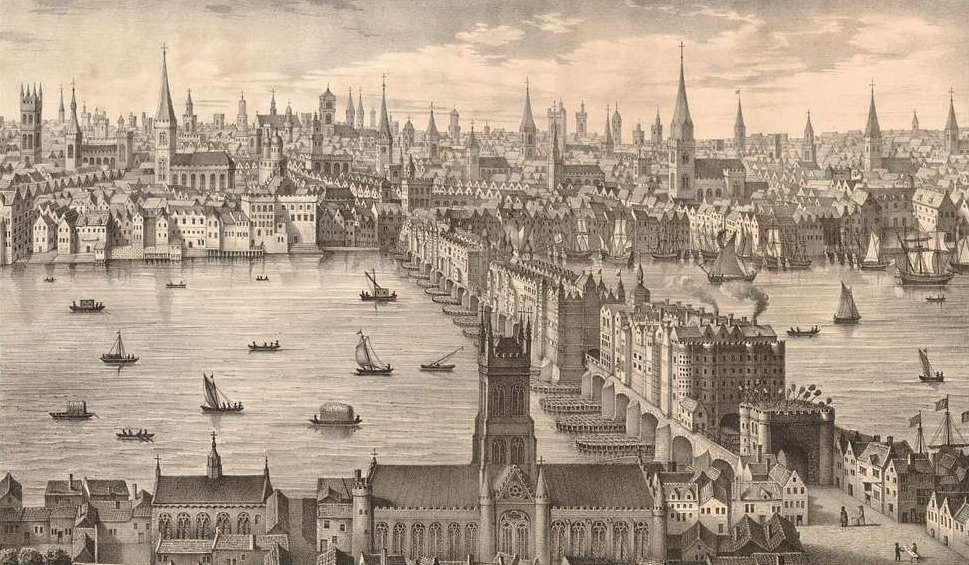
In the city, Forman gradually built a name for himself as a popular physician, herbalist, astrologer and occultist. He provided remedies and medical treatment and even performed surgeries. Yet he also cast lots and consulted astrological charts to predict the fates of his patients, at their request. This was not so unusual in the Elizabethan age. In fact, the Queen herself, Elizabeth I, had her own astrologer and alchemist – the famous John Dee.

Simon saw himself as a pious Christian, and believed he was doing God’s work, even as he clashed with the authorities and raised some eyebrows with his peculiar practices. According to Prof. Lauren Kassell, Forman “cultivated a persona as a figure of opposition and power, a magician. His magic could be seen as a science with which to master the workings of nature”.
The public, in any case, was convinced. Among his clients, Forman counted poor simple folk alongside Court-Ladies and knights, leading merchants as well as members of the clergy. His reputation received a major boost during the plague of 1592, when Simon remained in the city and succeeded in curing himself and a number of his patients, while most of the licensed doctors fled to the safety of the countryside. Forman was suddenly a hero.
His practice thrived in the years that followed, though he still had occasional run-ins with the law over his lack of a proper license.
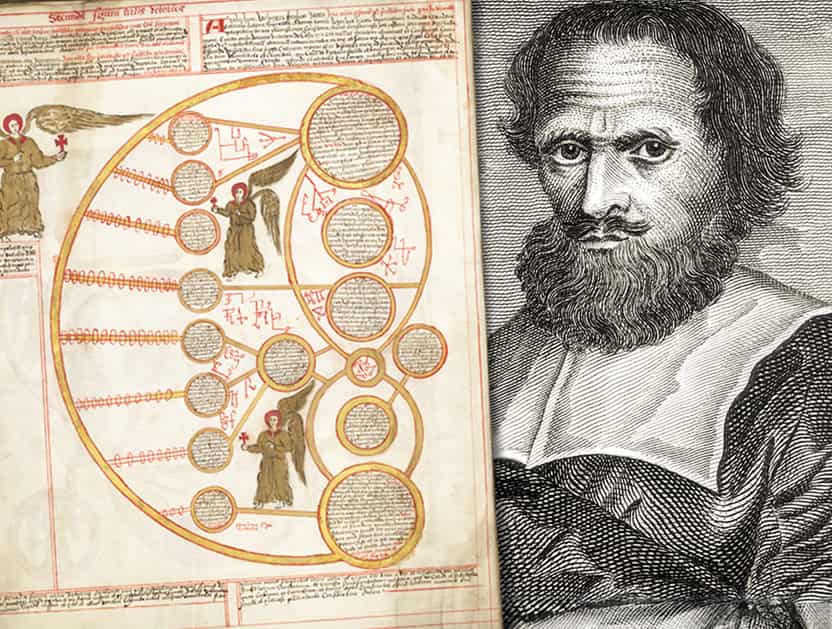
In 1599 he married and in 1600, at the height of his popularity, he completed a truly stunning work of art and magic – a remarkable manuscript – which is today part of the National Library of Israel collection.
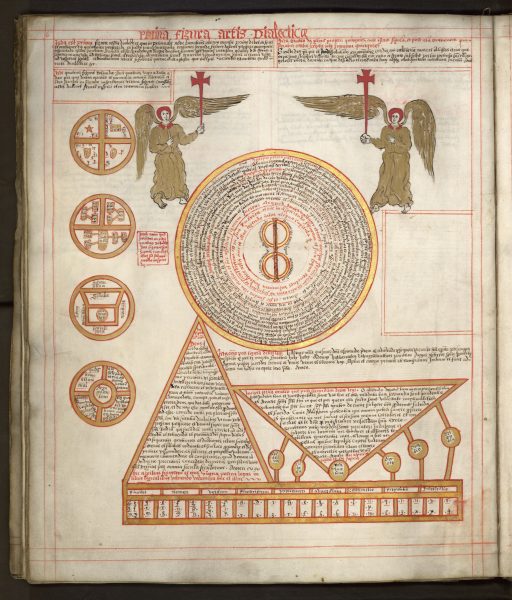
Forman titled this work Liber de Arte Memorativa (“The Book of the Art of Memory”).
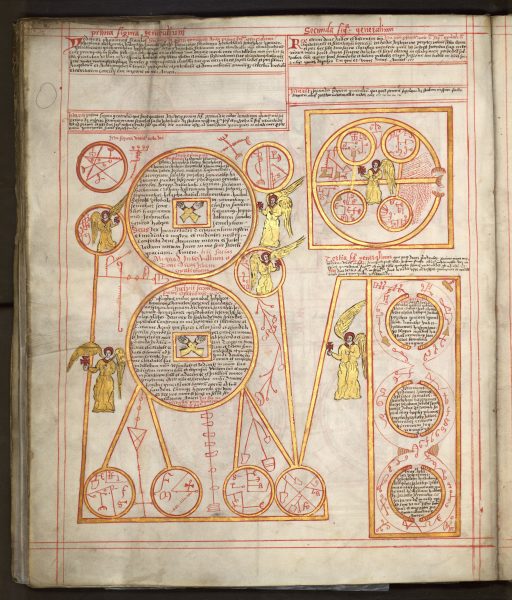
It is a physically massive handwritten book, 20.4 inches by 17.2 inches. It is written in Latin and contains a version of a famous magical text from the Middle Ages known as the Ars Notoria (“The Notary Art”).
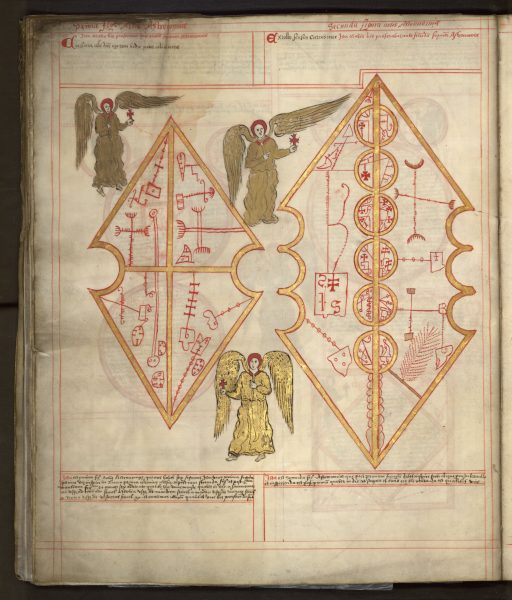
What was the purpose of this elaborate illustrated manuscript? And how did it end up in Jerusalem of all places, at the National Library of Israel?
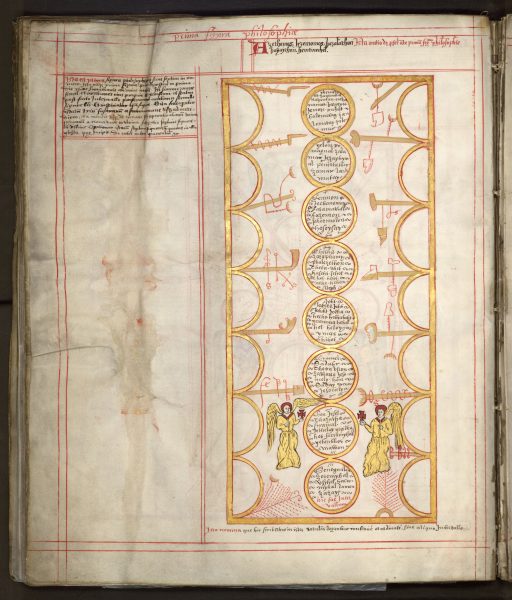
The Ars Notoria was believed to magically grant vast amounts of knowledge to those who were able to use it correctly, by reciting its obscure texts and gazing upon the strange symbols appearing on its pages (known as notae – thus “The Notary Art”). While Forman copied this manuscript with great skill and detail, he is not the original author, but we’ll get to that later.
All of these odd pursuits made Simon Forman quite an intriguing fellow, but rather ironically, he is perhaps most famous for something completely unrelated.
Forman was a contemporary of William Shakespeare. The social circles of the two men overlapped and Simon had the pleasure of attending and describing several performances of Shakespeare’s plays at the Globe Theatre, including Macbeth, Cymbeline and The Winter’s Tale.
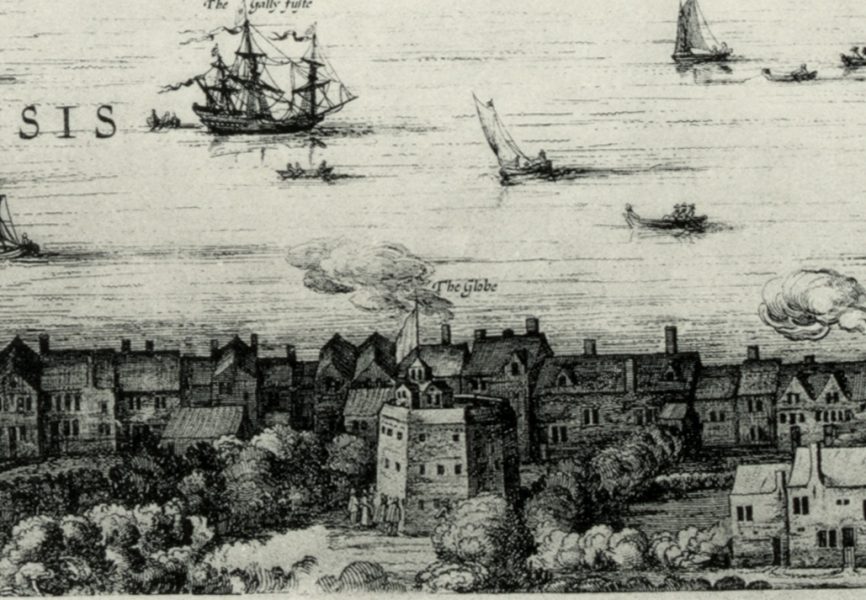
In fact, Forman is one of the few people we know of who wrote down his impressions of Shakespeare’s work while the playwright was still alive. His contemporary account, included in his diaries, is easily the longest and most comprehensive to have survived and it has been a valuable resource for historians.
Forman documented these experiences as he documented almost everything that happened to him. In his diaries, he kept records of everyday occurrences in obsessive detail, including descriptions of strange, vivid dreams, and experimentations with various magical and alchemical rituals, such as boiling snakes to change his hair color or drawing characters on his body to alter his destiny. He described his interactions with patients, his various relationships and even his very casual sexual escapades with a great many women.
Forman’s diaries, kept in the Bodleian Library at Oxford, serve not only as an exhaustive record of his own life, but also offer a glimpse into the lives of a host of characters who populated London in the Elizabethan era.
For example, as he was completing work on Liber de Arte Memorativa, in June of 1600, we learn from Forman’s diaries that he was tending to a client – a “Mrs. Webb”. She’d had enough of her husband, who was suffering from gonorrhea, and turned to Forman to provide her with an astrological remedy that might compel Sir Thomas Walsingham, one of the Queen’s courtiers, to fall in love with her.
We unfortunately don’t know if Mrs. Webb had any luck with Sir Thomas, but we do know something of the great work on which Simon Forman was putting the finishing touches at the time.
As mentioned, Forman’s manuscript is a version of what’s known as the Ars Notoria. The oldest versions of this text date to the early 13th century, so Forman was building on an already well-developed tradition when he made his copy in 1600.
As Prof. Kassell explains, Forman’s version begins with an account of how God sent an angel by the name of Panphilius to King Solomon “bearing golden tablets inscribed with geometrical images encasing orations or prayers composed of the names of angels in Chaldean, Greek, and Hebrew.” The angel then taught Solomon how to use the tablets, which allowed the famous biblical king to obtain “all wisdom and knowledge.”
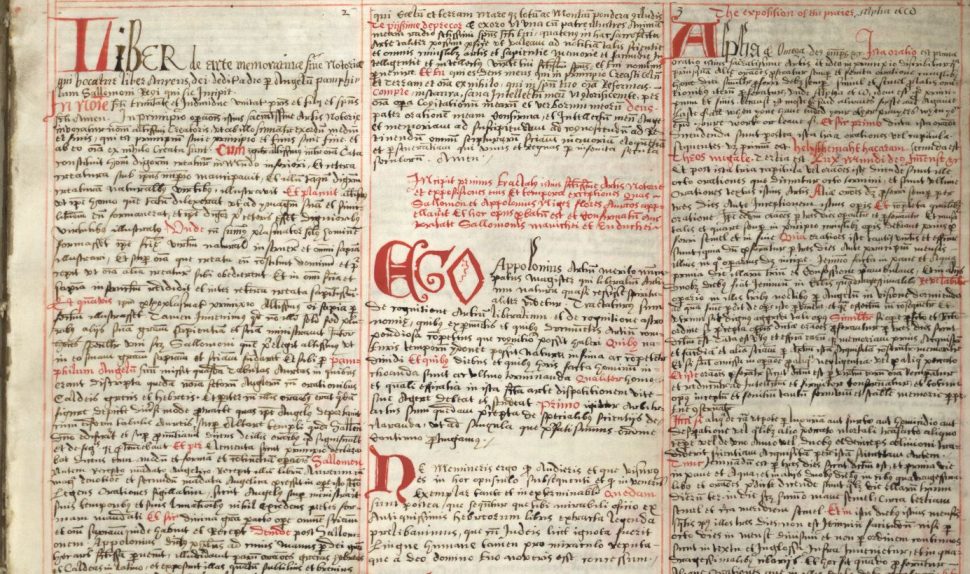
The text goes on to describe how Solomon passed the Notary Art to a man by the name of Apollonius, who translated the prayers into Latin and added commentary. Some associate him with Apollonius of Tyana, a 1st century philosopher and mystic, but there is no actual evidence to suggest the Ars Notoria is truly that ancient.
Lauren Kassell further explains the supposed methodology of the Ars Notoria:
“He who rehearsed these prayers and contemplated these images (each notae was made up of a series of figurae) according to the appropriate positions of the moon throughout the month (lunations) and according to the correct regime throughout the day would achieve the understanding of all sciences, a perfect and enduring memory, and the eloquence with which to express such knowledge. This was the first step. The adept could then proceed to the knowledge of the seven liberal sciences, again by speaking the orations and inspecting the figurae at the correct moments over a period of time.”
[From – Medicine and Magic in Elizabethan London: Simon Forman: Astrologer, Alchemist, and Physician, by Lauren Kassell, Oxford: Clarendon, 2005]
The seven liberal sciences – often called the seven liberal arts – were: grammar, logic, rhetoric, arithmetic, geometry, music and astronomy.
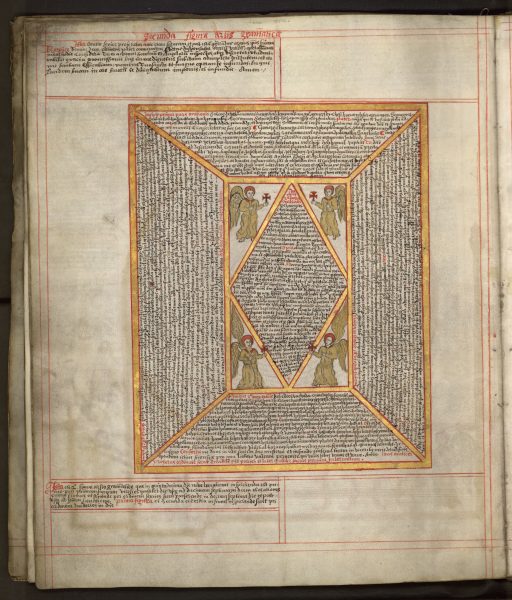
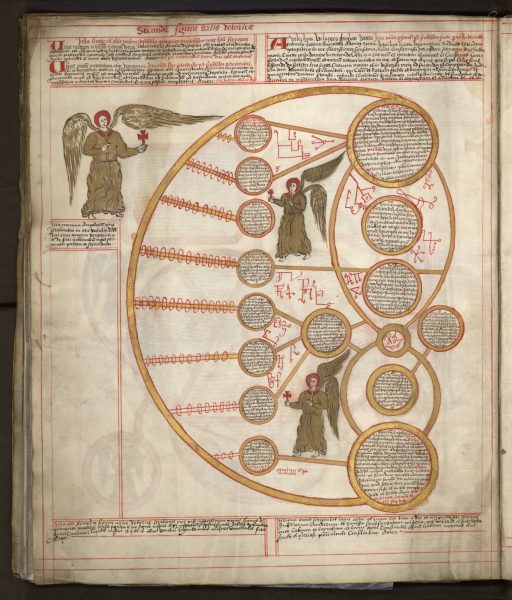
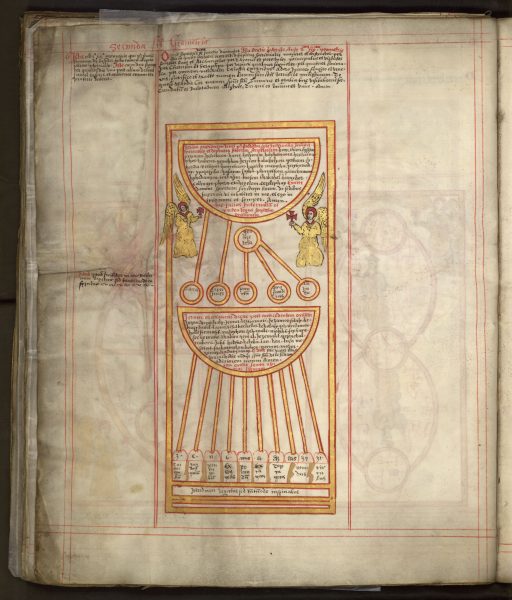
The complete ritual of the Ars Notoria stretched over several months and also involved a number of fasts which the practitioner was expected to undertake. A shortcut to all-encompassing knowledge, perhaps, but a fairly demanding one, nonetheless.
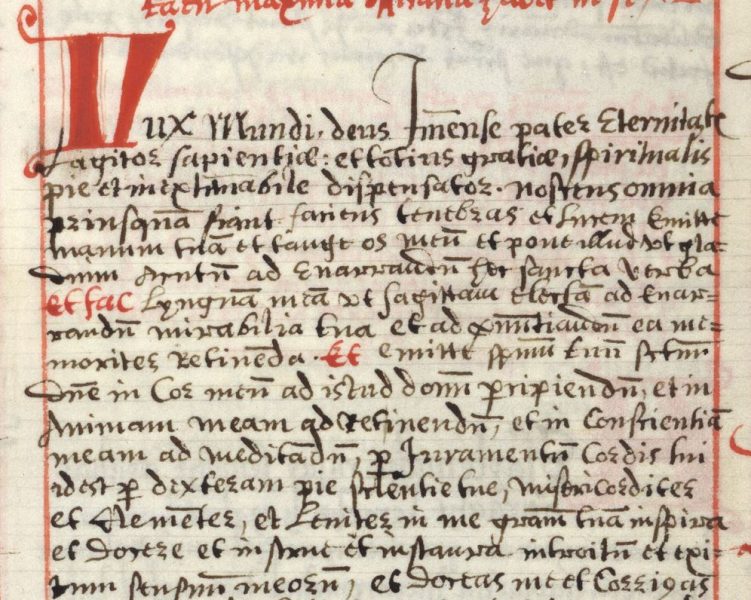
One of the orations, or prayers, to be recited is known as the Lux Mundi (“light of the world”) prayer:
“O God, the Light of the World, Father of Immense Eternity, Giver of all Wisdom and Knowledge, and of all Spiritual Grace; most Holy and Inestimable Dispenser, knowing all things before they are made; who makes Light and Darkness: Stretch forth thy Hand, and touch my Mouth, and make my Tongue as a sharp sword; to shew forth these words with Eloquence; Make my Tongue as an Arrow elected to declare thy Wonders, and to pronounce them memorably…”
[Translation appearing in Ars Notoria: The Method Version B, Mediaeval Angel Magic, by Dr. Stephen Skinner, Golden Hoard Press]
There are also prayers consisting of long lists of what have been called verba ignota (“unknown words”), often arranged in interesting visual patterns. The text presents these words as names of angels (and some would add demons as well) in ancient Chaldean, Hebrew and Greek, though many of them seem likely to be the result of a lively imagination. The practitioner was expected to read these archaic names out loud while gazing at the relevant notae. The supernatural beings whose names were invoked were then expected to bestow the cherished knowledge upon the reciter.
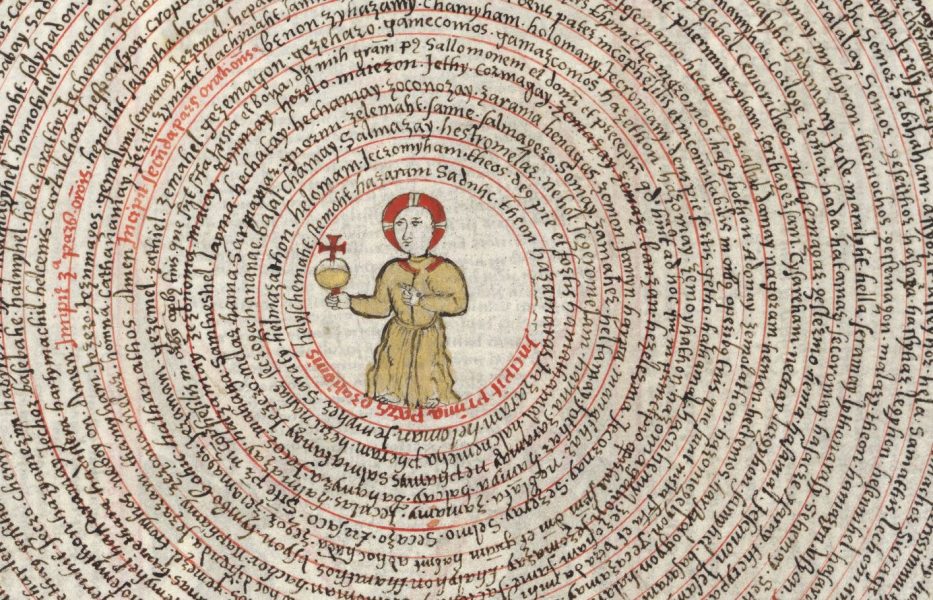
Simon Forman saw himself as a practitioner of heavenly magic, a force for good, but not everyone shared such a positive view of the Ars Notoria. Thomas Aquinas, the famous theologian and philosopher, for example, condemned it as an attempt to communicate with demonic forces.
There was also the case of John of Morigny, a French Benedictine monk who lived in the 13th and 14th centuries. John was a practitioner of the Ars Notoria who eventually came to believe that the art was tied to the devil, following a series of frightening visions. He was, however, still intent on using this magic to attain knowledge. He therefore created a “cleansed” version that omitted the mysterious names and symbols, believing these were the source of the evil. This did not prevent Church authorities from burning one of his books in Paris in 1323.
The exact origins of the Ars Notoria are unclear, and we do not know the identity of the original author or authors. As mentioned, there have been attempts to suggest the Notary Art dates back to antiquity, but there is no evidence to support this. However, Dr. Stephen Skinner and Daniel Clarke have pointed to a certain similarity between the Ars Notoria and the Sar-Torah texts.
The Sar-Torah texts are part of Ma’aseh Merkavah (“Work of the Chariot”), a Jewish mystical tradition dating to the Gaonic period (589-1030 CE). These texts contain rituals for conjuring an angel, Sar-Torah (“The Prince of the Torah”‘ often identified as Metatron), with the purpose of gaining vast knowledge of the Torah and an enhanced memory. As in the case of the Ars Notoria, the rituals involve the invocation of strange divine names as well as intense sessions of prayer lasting many days.
Whether or not the idea of a Jewish origin for the Ars Notoria has any true merit, it seems that inspiration did indeed flow in the opposite direction. Skinner and Clarke have pointed out that some of the notae, the strange geometric diagrams and symbols of the Ars Notoria, eventually made their way into certain Jewish works, like this Hebrew version of the Key of Solomon from 17th century Toledo:
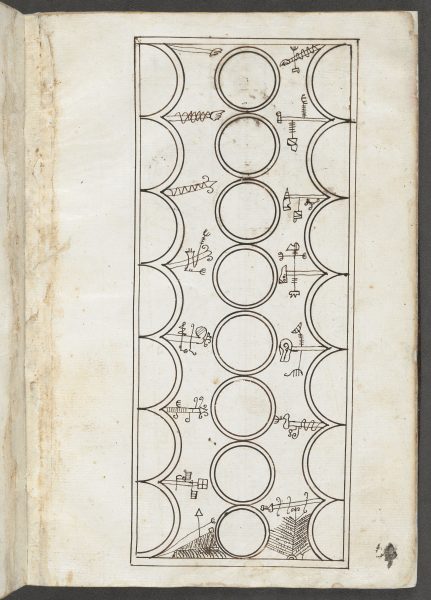
Such works were typically not of Jewish origin and were, in fact, translated into Hebrew.
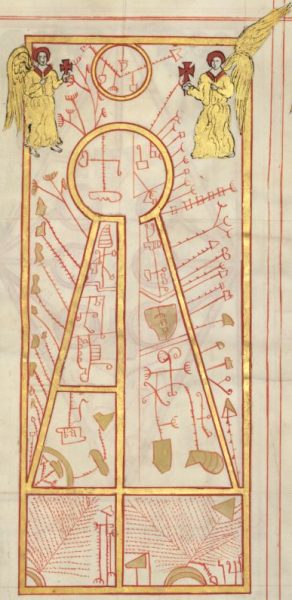
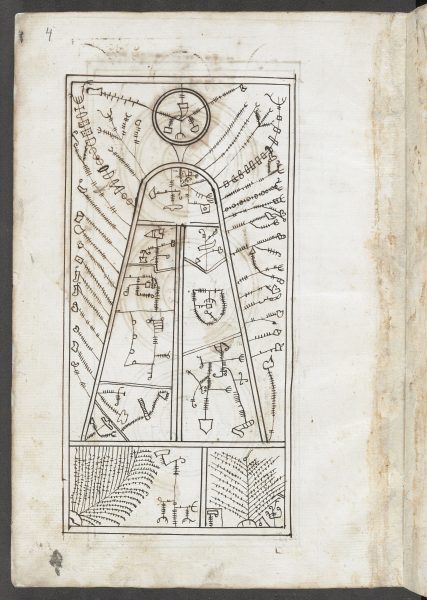
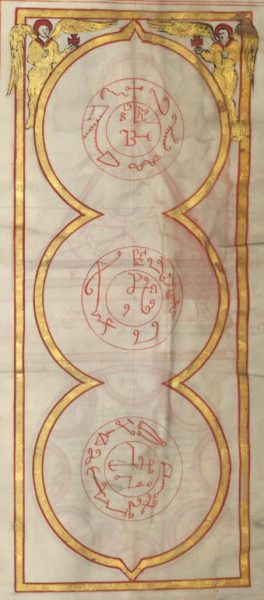
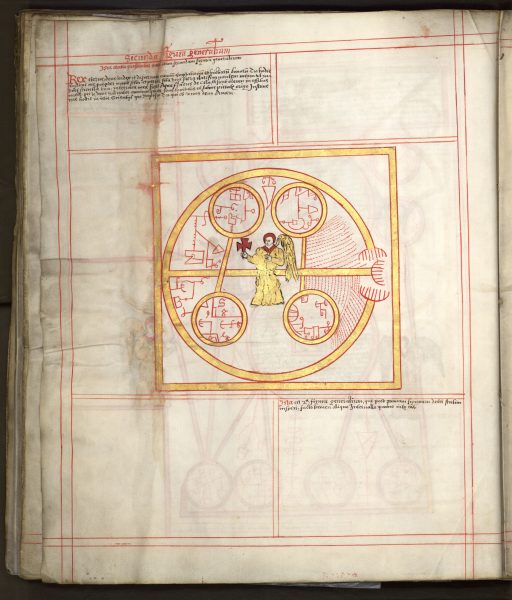
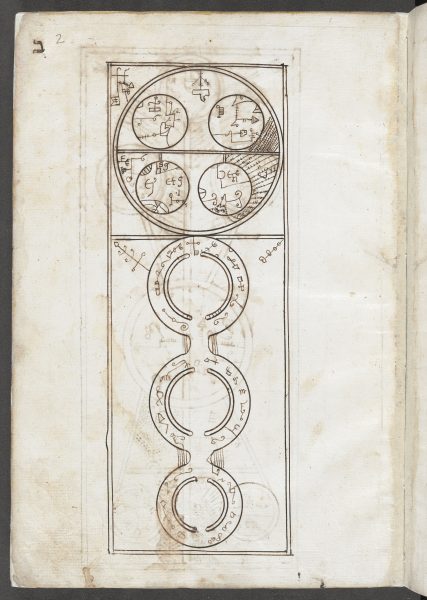
It’s worth noting that the title Forman chose for his book – Liber de Arte Memorativa – (“The Book of the Art of Memory”) is somewhat misleading, since the contents are simply a version of the Ars Notoria, the Notary Art tradition. “The Art of Memory” is a term associated with a completely different system of non-magical mnemonic and visualization techniques to improve memory. The Art of Memory’s roots date back to antiquity, and it was further developed in the Middle Ages, when it occasionally overlapped with different magical traditions, including the Ars Notoria.
While both the Notary Art and the Art of Memory make use of symbols and visualization, they are not one and the same. Their conflation in the title of Forman’s book is therefore inaccurate, but not unique. Prof. Benedek Láng has pointed out two additional versions of the Ars Notoria, aside from Forman’s, which make a similar conflation.
Forman likely created his book in order to sell it for profit. The main clue suggesting this is that the book was separated from the rest of Forman’s estate long ago. In fact, it contains a book plate, or an ex libris, indicating it was once in the possession of George Wrighte of Gothurst.
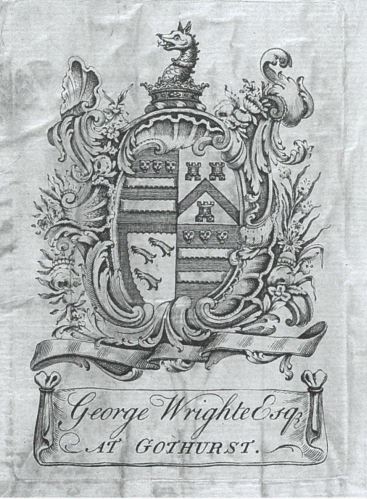
There were actually three different “George Wrightes” who lived at Gothurst House (today known as Gayhurst House) in Buckinghamshire, England, from 1704 to 1804. The second of them served in the House of Commons. Yet with no date appearing on the bookplate, we unfortunately do not know for certain which of these three men first came to possess Liber de Arte Memorativa.

The book likely changed hands several times afterwards, before being bought at auction in London in the early 20th century by the esteemed Jewish collector and scholar, Abraham Shalom Yahuda. Yahuda made the decision to leave his vast collection of books, letters and manuscripts to the Jewish National and University Library, today’s National Library of Israel, shortly before his death in 1951. They eventually arrived in 1967. Liber de Arte Memorativa has been housed in Jerusalem ever since.
Simon Forman died in the year 1611; he was not yet 59. His reputation as a well-known magician and occultist ensured that all sorts of strange tales about him arose after his passing. He was even implicated in the murder of the poet Sir Thomas Overbury during a sensational trial, through accusations that he supplied poison to the killer, Frances Howard, one of his female patients. These claims seem to have been exaggerated though, and in any case, Forman had already been dead for two years at the time of Overbury’s death.
According to the account of another 17th-century astrologer, William Lilly, Forman predicted his own death, telling his wife on a Sunday that he would die before the upcoming Thursday night:
“‘Thou wilt bury me, but thou wilt much repent it.’ ‘Yea, but how long first?’ ‘I shall die,’ said he, ‘ere Thursday night.’ […] Thursday came, and dinner was ended, he very well: he went down to the water-side, and took a pair of oars to go to some buildings he was in hand with in Puddle-dock. Being in the middle of the Thames, he presently fell down, only saying, ‘An impost, an impost,’ and so died. A most sad storm of wind immediately following.”
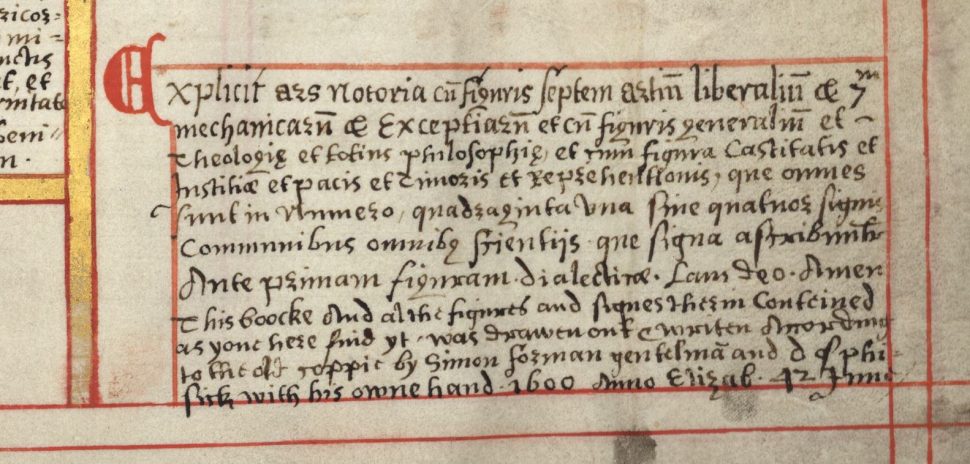
You can view Simon Forman’s great work, Liber de Arte Memorativa, in its entirety on the National Library of Israel website, here.
Further Reading:
Ars Notoria: The Grimoire of Rapid Learning by Magic, with the Golden Flowers of Apollonius of Tyana, by Stephen Skinner and Daniel Clarke, Golden Hoard Press, 2019
Ars Notoria: The Method Version B, Mediaeval Angel Magic, by Stephen Skinner, Golden Hoard Press, 2021
Liber Florum Celestis Doctrine – The Flowers of Heavenly Teaching, by John of Morigny, an edition and commentary by Claire Fanger and Nicholas Watson. Toronto, Ontario, Canada: Pontifical Institute of Mediaeval Studies, 2015
Medicine and Magic in Elizabethan London: Simon Forman: Astrologer, Alchemist, and Physician, by Lauren Kassell, Oxford: Clarendon, 2005
Mystical Prayer in Ancient Judaism: An Analysis of Maaseh Merkavah, by Michael D. Swartz,
Tuebingen: J.C.B. Mohr (P. Siebeck), 1992
Simon Forman: Sex and Society in Shakespeare’s Age, by A.L. Rowse, London: Weidenfeld & Nicolson, 1974
“The Art of Memory and Magic (the Ars Memorativa and the Ars Notoria)”, by Benedek Láng in Culture of Memory in East Central Europe in the Late Middle Ages and the Early Modern Period, ed. Rafal Wójcik, 87-93. Poznan: Bibioteka Uniwersytecka, 2008


