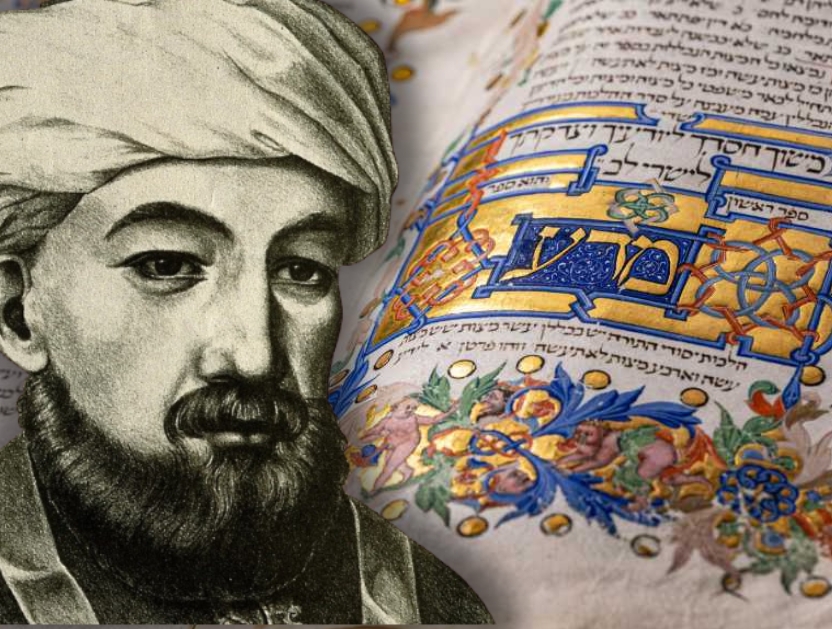
He was not yet thirty years old. This is perhaps the first astonishing fact about the man who single-handedly joined parchment to parchment to compose a work of immense scope, one that would forever change the way Jews transmitted Torah from generation to generation. The second astonishing fact is that he knew exactly what he was doing, and that the revolutionary result was precisely what he intended.
He arrived in Fustat (Cairo) together with his father, his brother, and other family members, but without a wife. Egypt was the final stop in a journey of flight and wandering that had stretched across two decades and three continents.
Maimonides— Rabbi Moses ben Maimon — often known as the Rambam among his own people, or Abu ʿImrān Mūsā ibn Maymūn ibn ʿAbd Allāh al-Qurṭubī al-Isrāʾīlī among Muslims, was born in the first half of the 12th century in Córdoba. Today part of Spain, the city was then the capital of al-Andalus, the Muslim-ruled region of the Iberian Peninsula.

He was only ten years old when the Almohads from North Africa invaded Córdoba and forced his family to flee for their lives. Even then, he was already more learned than most adults of his generation, both in Jewish law and in what were then considered the “external sciences”: mathematics, philosophy, and even medicine.
For two decades, the family wandered in search of a safe place to settle, first within the Iberian Peninsula, and later across the Mediterranean, in Morocco, before reaching the Land of Israel, and finally Egypt.
By the time Maimonides arrived in Egypt, his reputation had already spread as an inter-regional halakhic authority whose influence was felt far and wide. He maintained extensive correspondence with distant Jewish communities and leading rabbis around the world. In the midst of flight and upheaval, he had also composed a comprehensive commentary on the six orders of the Mishnah. In Egypt, he was almost immediately appointed Raʾīs al-Yahūd — “Head of the Jews” — and for a moment, it seemed that he had finally attained a measure of stability and comfort.
He was twenty-nine years old.
Freed, at least temporarily, from the burden of wandering, as well as from financial worries (his merchant brother supported the extended family), Maimonides embarked on a new literary project, even as his Mishnah commentary was already beginning to circulate.

The goal of this new project was ambitious: to gather all components of the Oral Torah that had been committed to writing up to his time — the Mishnah, the Talmud, and their commentaries by the Tannaim, Amoraim, Geonim, and early Rishonim — into a single book. A work that would not only organize the vast body of material by subject, but arrange it according to practical categories, rule decisively between conflicting opinions, and in effect establish binding halakhah — codified Jewish law.
His intentions were entirely explicit, and he declared them clearly in the title he gave the work: Mishneh Torah, meaning “review/repetition/restatement of the Torah”.
Therefore, I have called this text, Mishneh Torah [with the intent that] a person should first study the Written Law, and then study this text and comprehend the entire Oral Law from it, without having to study any other text between the two.
(Introduction to Mishneh Torah)
At the same time, Maimonides continued to serve as leader of Egypt’s large Jewish community, as a halakhic judge, and as an advisor to Jewish communities throughout the world.
But the stability he had built did not last long. About five years after beginning work on Mishneh Torah, his beloved brother, who was also his source of livelihood, perished when his merchant ship sank in the Indian Ocean.
Maimonides did not receive this news lightly. For a full year, he later testified, he “fell ill and was confined to bed.” Yet this was not the end. He recovered, returned to his communal responsibilities, and continued writing. Now forced to support himself, he added yet another demanding occupation to his already crowded schedule: the practice of medicine. He quickly became one of the finest physicians in Egypt, respected both within the Jewish community and among the Muslim population.
After roughly four more years — during which he continued to serve as rabbi, halakhic authority, and physician — he completed the longest Jewish work ever written by a single individual: Mishneh Torah. Fourteen “books,” divided into laws by subject, comprising one thousand chapters. Today the work is usually printed, nearly a millennium later, in seven or fourteen volumes.

Maimonides’ contemporaries did not rush to embrace the work. His method of codifying halakhic rulings was entirely new, unlike anything that had preceded it, and he was soon inundated with waves of criticism from nearly every Jewish community in the world.
Rabbi Abraham ben David of Posquières, known as the Raavad, compiled many of his objections, often sharply worded, into a separate work titled Hasagot ha-Raavad.
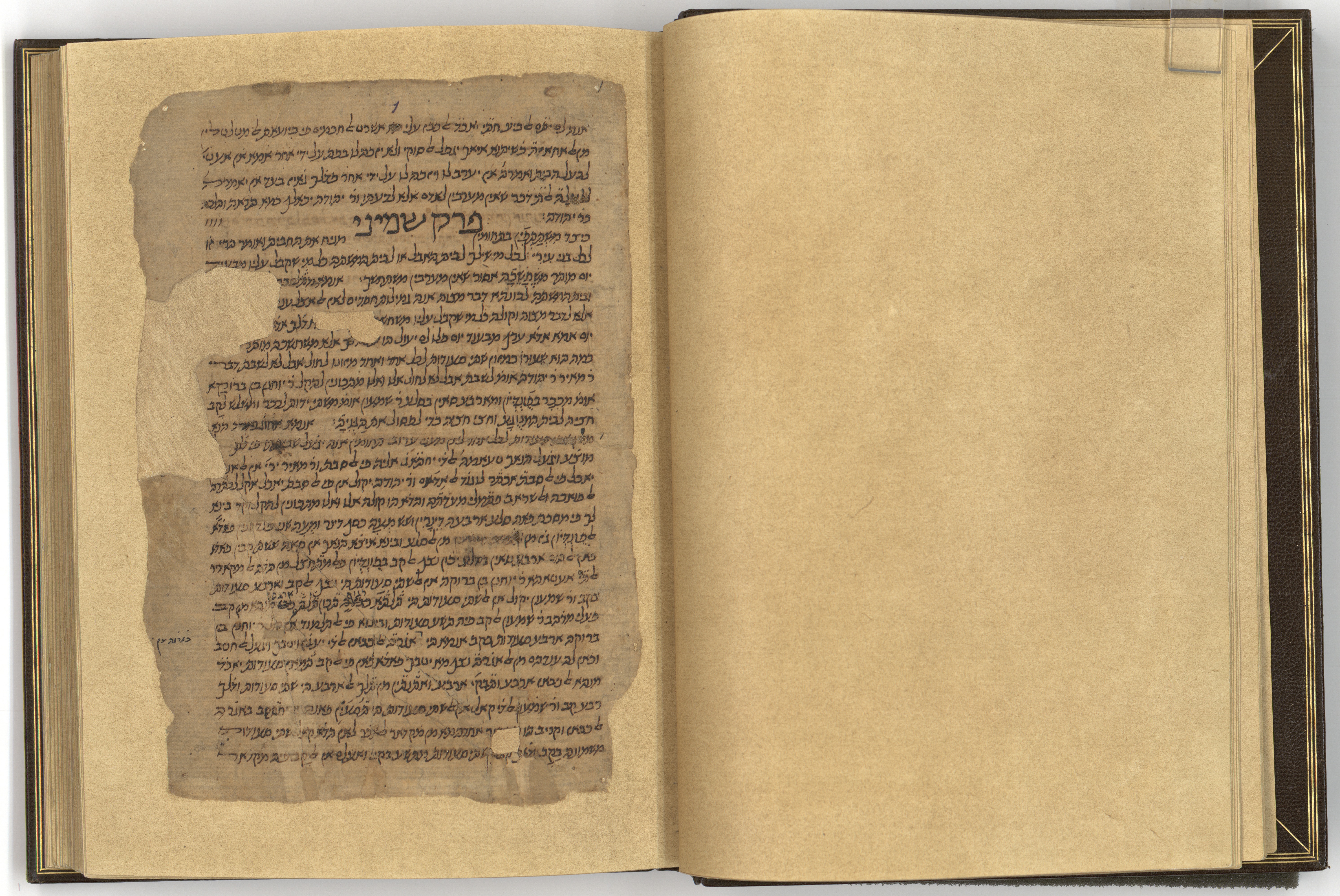
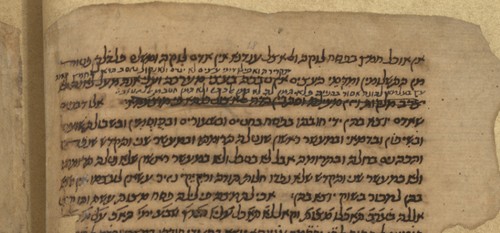
Some of the critiques were accepted by Maimonides himself. In fragments discovered in the Cairo Genizah, one can see his own deletions, corrections, and expansions within the manuscript. One of the central criticisms concerned the absence of source citations: how, critics asked, could one debate a ruling without knowing upon what sources it rested?
In one letter included in The Letters of Maimonides, addressed to Rabbi Pinḥas the Judge, Maimonides acknowledges the difficulty:
“A judge came to me with pages from my book in his hand, from Hilchot Rotzeach. He showed me a section and said, ‘Read this.’ I read it. I then said to him, ‘What is your question?’ He responded, ‘Where do these words come from?’ I said to him, ‘They are found in the relevant section, either from Eilu Hen Ha-Golin or from Sanhedrin.’ He responded, ‘I already looked through all of these and I could not find it.’ I said to him, ‘Perhaps it was in the Jerusalem Talmud?’ He responded, ‘I already searched in the Jerusalem Talmud and the Tosefta and did not find it.’ I said to him, ‘I remember that at a certain place in Gittin these ideas were set forth.’ I pulled out a Gittin and I searched and could not find it. I was really puzzled… Finally, after he left, I remembered! I sent a messenger and brought him back and I showed him the matter explicitly in Yevamot, mentioned as an aside…”
“I am always worried when people come to me and ask, ‘Where were these things said?’ Sometimes I can answer the questioner immediately: ‘In this place.’ Other times I cannot say and I cannot remember the source without searching. I am greatly pained by this. I say to myself: If I am the author and the source escapes me, what about the rest of the people?
Later in the letter, he writes that he intends to correct this flaw by publishing a separate volume of sources, but this plan was never realized.

Much later in life, Maimonides would again find himself at the center of fierce controversy. He would marry, father a beloved only son, be appointed personal physician to the ruler of Egypt, write and publish additional works, most notably Guide of the Perplexed. and become one of the most influential figures in the development of Jewish thought.
But today, we are telling the story of Mishneh Torah.
Unlike his other works, Maimonides wrote this book in Hebrew — not biblical Hebrew, but the clearer, more accessible language of the Mishnah. One of his aims was to reach as many Jews as possible, in the most intelligible language available. Over time, however, no complete copy of his original manuscript survived, aside from fragments discovered in the Cairo Genizah.
As a result, differences between versions became a major scholarly concern. Competing copies claimed greater authority, whether they had been reviewed by Maimonides himself or copied from manuscripts he had “approved.” One copy preserved at Oxford even bears a signature on its final page: “collated against my book, I, Moshe bar Maimon.”
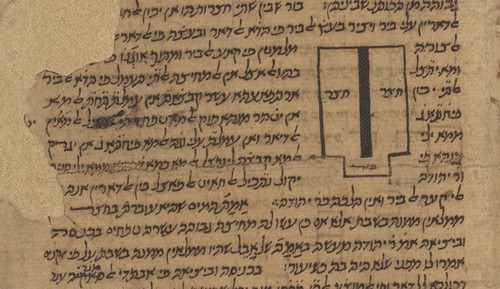
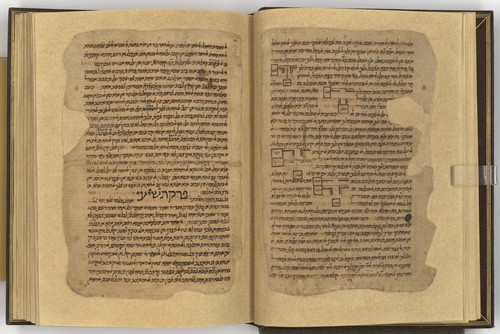
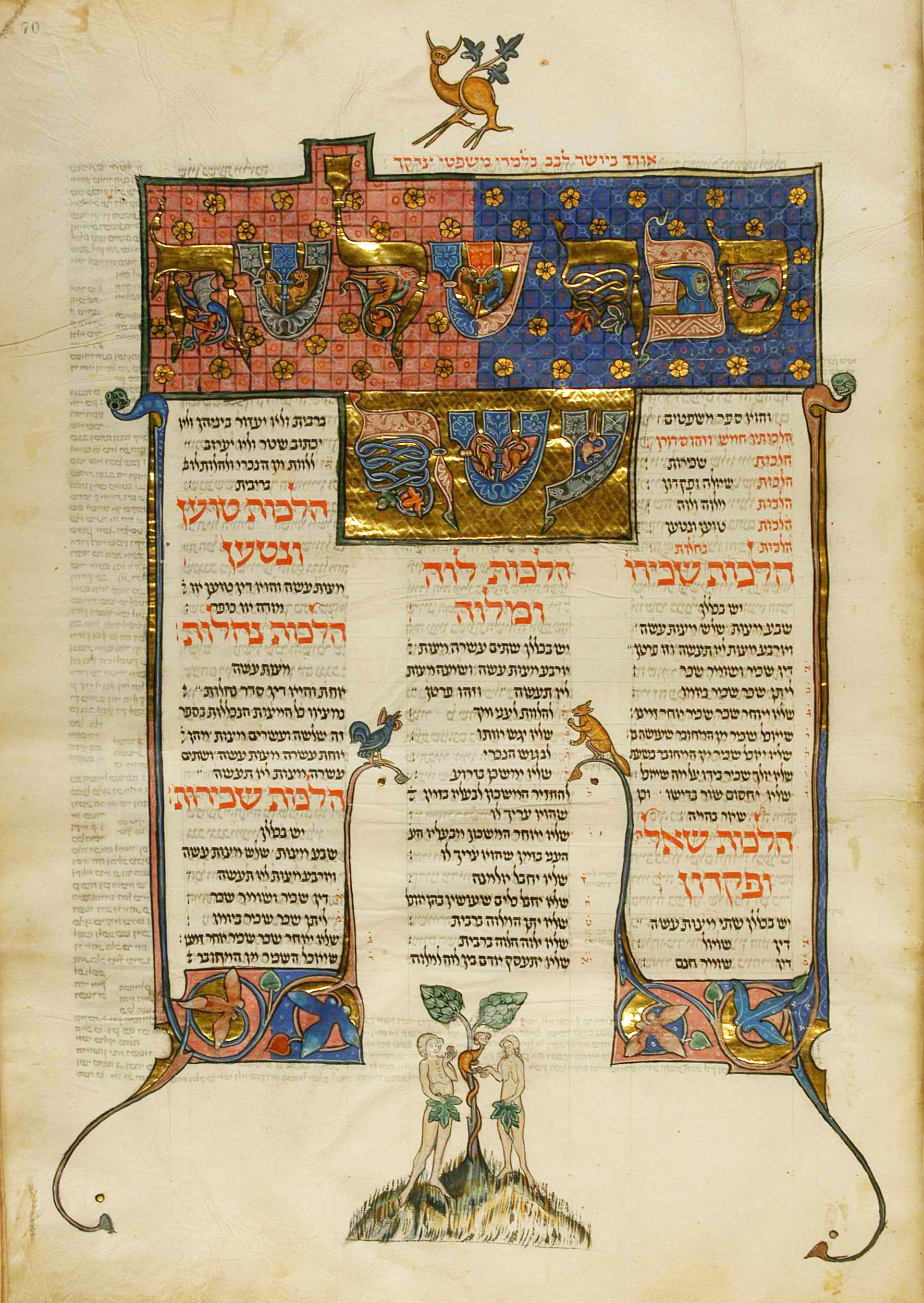
The magnificent manuscript now held by the National Library of Israel was likely copied in the first half of the 14th century in Provence. It appears to have been created from the outset as an illuminated manuscript: wherever Maimonides had included illustrations in the original. especially in Laws of the Chosen House, depicting the Temple and its vessels, blank spaces were deliberately left so that an artist could execute the images with maximum precision.

The work of illumination seems to have begun at the hands of a Spanish artist, but very early on the manuscript was transferred to Italy. There, the task was entrusted to a Christian illuminator, Matteo di Ser Cambio, whose exquisite craftsmanship, rich in gold and vibrant color, can be seen throughout the opening section of the book. Though he did not understand the language of the text, he was clearly working from detailed instructions regarding what the decorations should include.
Why the project was never completed remains unknown. Only the opening pages of the manuscript, out of more than 400 in total, were illuminated, and the instructional diagrams that were meant to accompany the text were never drawn.

Artistry was followed by censorship. In the 16th century, several passages were erased from the manuscript, and at the bottom of one of the final pages the censor’s signature appears, along with the date of the deletion: 1574.
“Even Jesus the Nazarene, who imagined that he would be the Messiah and was executed by the court,” Maimonides writes in passages that were later censored, “was already foretold by Daniel, as it is said: ‘the children of the violent among thy people shall lift themselves up to establish the vision; but they shall stumble.’ And is there a greater stumbling block than this? For all the prophets spoke of the Messiah as one who would redeem Israel and deliver them, gather their dispersed, and strengthen their observance of the commandments. Yet this [belief] brought about Israel’s destruction by the sword, the scattering and humiliation of its remnant, the distortion of the Torah, and the misleading of much of the world into worshiping a god other than the Lord.”

From Mishneh Torah by Maimonides. Manuscript dated to c. 1350, from the National Library of Israel collection, Ktiv Project.
Despite such interventions, Maimonides’ influence only deepened after his death. He became one of the most consequential figures in Jewish history and thought. His writings are today an integral part of the Jewish canon, and his philosophical and medical works also secured him enduring recognition beyond the Jewish world.
The manuscript itself passed through many hands across Europe, from the library of an Italian marquis to a Jewish family in Frankfurt between the two World Wars, before ultimately reaching safe preservation at the National Library of Israel in Jerusalem. Today it is displayed in the National Library of Israel’s permanent exhibition, where visitors can encounter it in person.