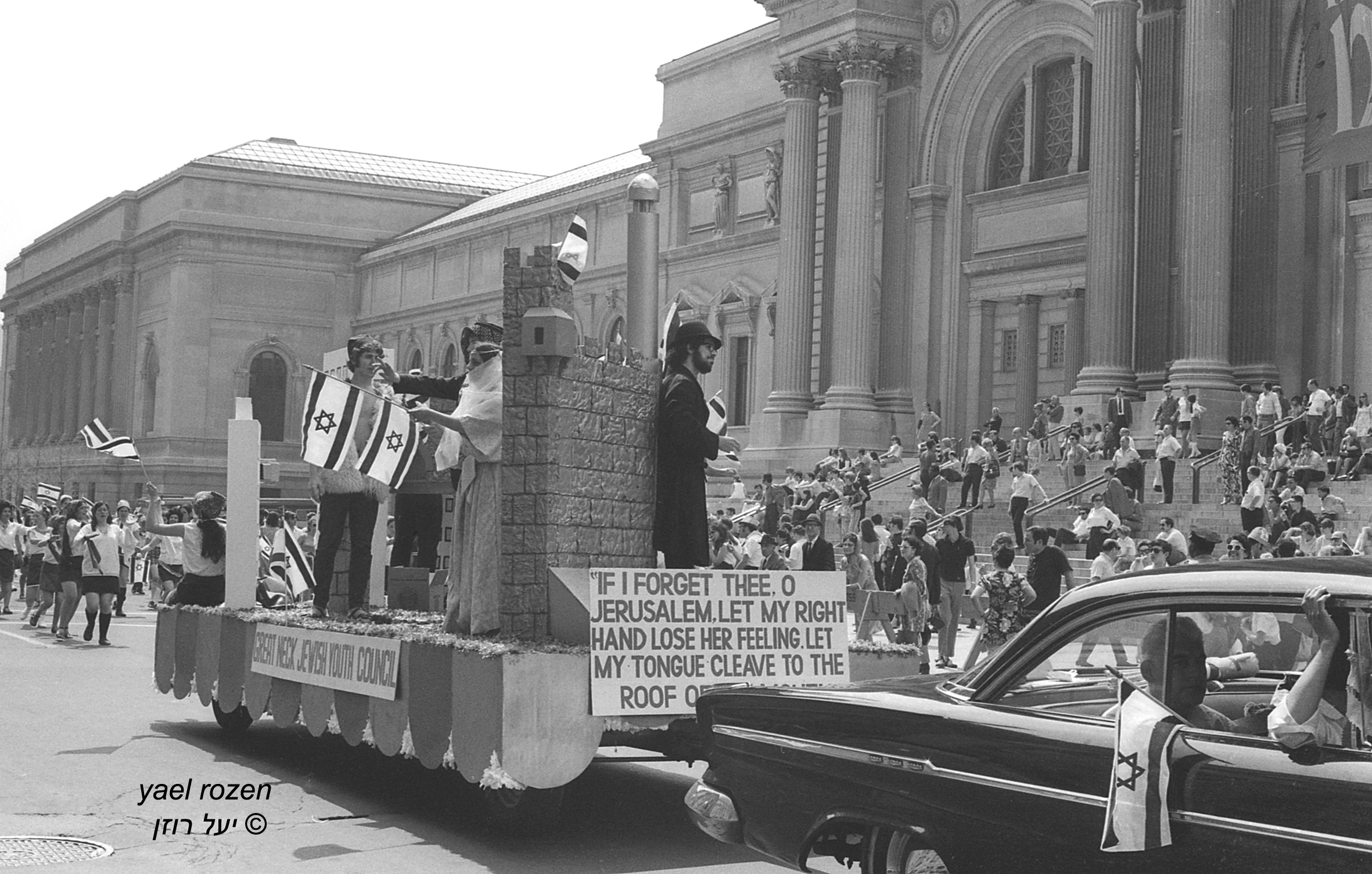
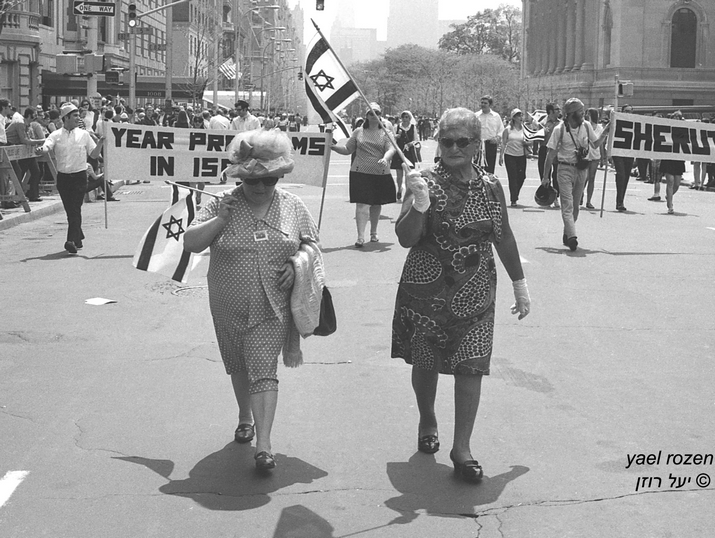
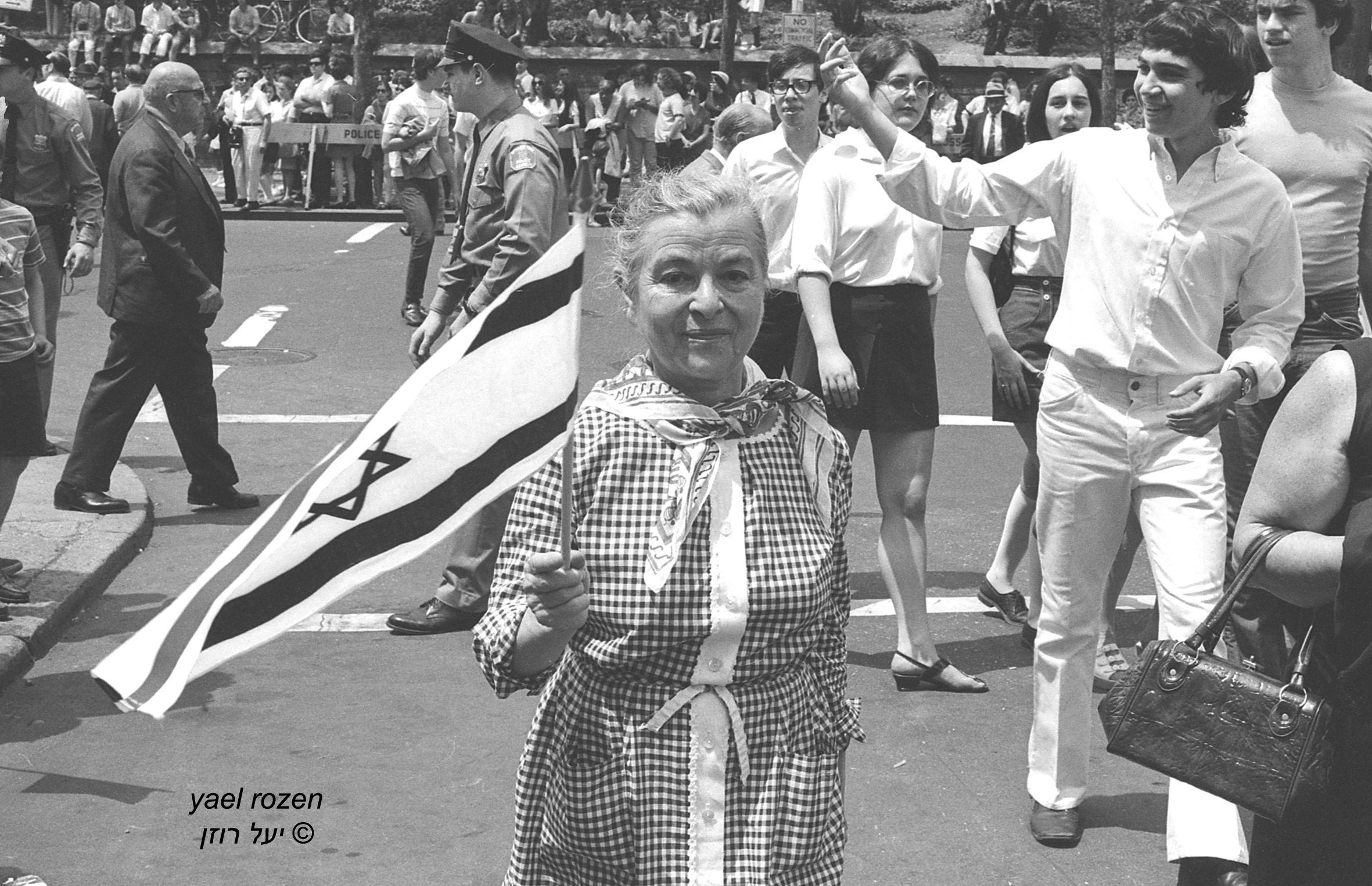
In 1969 photographer Yael Rozen happened to be in New York City just in time for the Israeli Independence Day parade. View the photos from the joyous event in the Big Apple.
Two years after the Six-Day War, when Israel was still euphoric, Fifth Avenue was the place to celebrate the independence of the young Jewish state.
Yael Rozen was in the United States taking a photography course and she captured magical moments of the parade.
Celebrating the liberated JerusalemThe National Council of Young Israel toiling the landYoung “Revolutionaries” flying the flags of Israel and the United States, both free of the British EmpireBeitar and a Hora circle marching togetherThe ladies of “Hadassah” marching on Fifth AvenueProud to wave the flag
All rights reserved to Yael Rozen.
The Haggadah That Brought the Nazis to the Seder
A glimpse into a Haggadah written for the residents of the displaced persons camp in Munich, illustrated by a Holocaust survivor.
For many of the residents of the displaced persons camp in Munich in April, 1946, the upcoming Passover Seder symbolized more than the Jewish people’s historical redemption; it was the reality unfolding before their eyes. Many of the survivors clustered together in the displaced persons camp had hoped that they would celebrate Passover of 1947 far from the land where their loved ones had been slaughtered, far from the land in which the Nazis and their collaborators aimed to destroy them and the entire Jewish nation. Those in the know spoke about that Passover night as the “Seder of the exodus from Europe”.
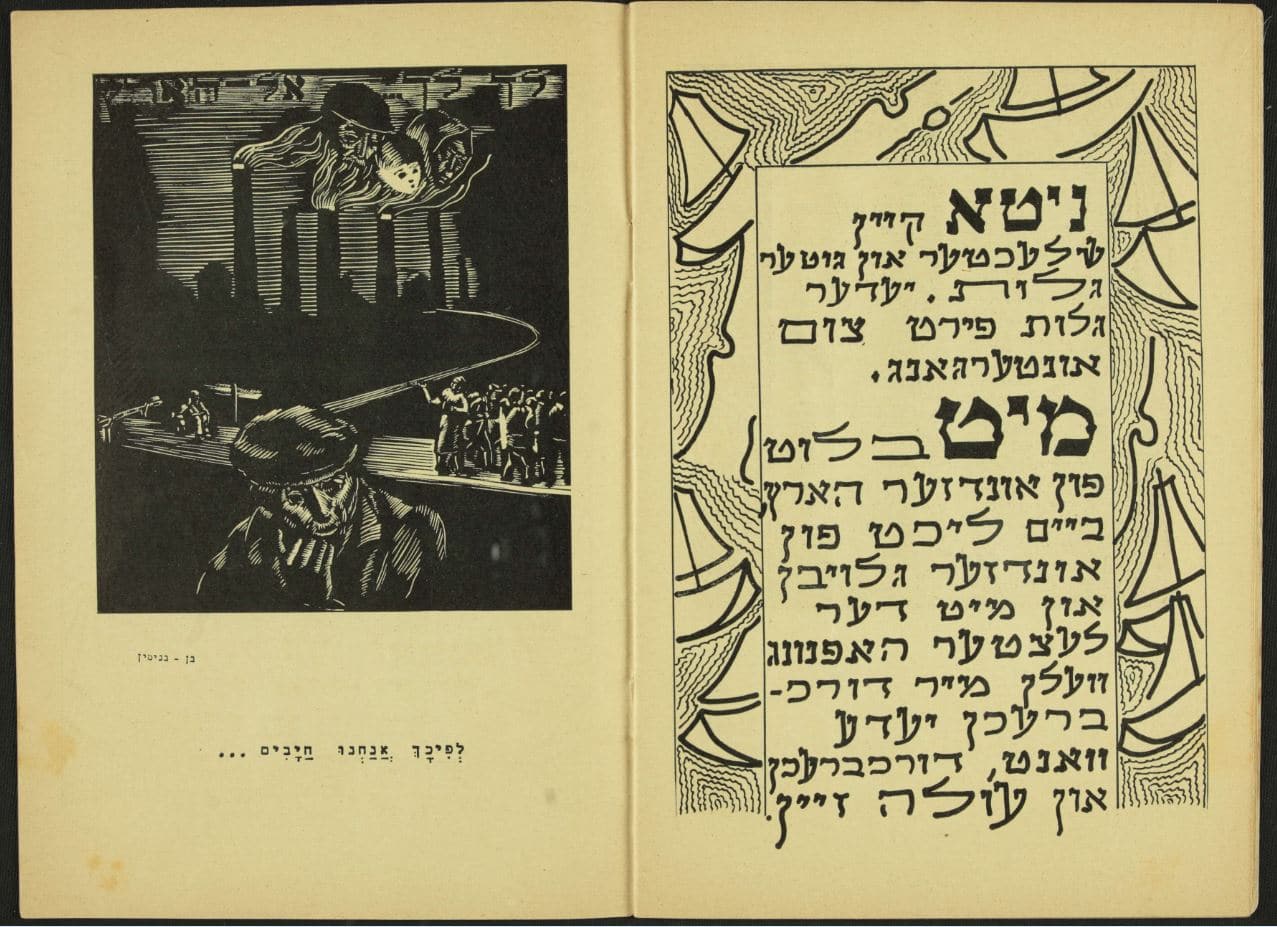
Yosef Dov Sheinson, a resident of the camp, wanted to express this sentiment in a Haggadah which he wrote for the Seder in the displaced persons camp. The excerpts in Hebrew and Yiddish which Sheinson added to the traditional haggadah are accompanied by woodcuts by the Jewish-Hungarian artist Zvi Miklos Adler, who signed his name in the Haggadah as “Ben Binyamin”.
Depicting the horrors of the Holocaust which he himself experienced during the war years, Adler’s harsh drawings complement the text of the Haggadah. In an illustration corresponding with the well-known sentence “for not only one has risen against us to destroy us” we see a soldier shooting several wretched looking prisoners, while another soldier leads a group of stooped prisoners toward an unknown destination. The picture gradually fades away as the prisoners move away from the center of the event.
“For not only one has risen against us to destroy us”
The intertwining of traditional text and modern pictures illustrates the way the creators of the Haggadah grasped the historical moment in which they lived: in each and every generation a person must see himself as if he left Egypt, but it is not in every generation that a person undergoes horrors which darken his world and dwarf the suffering experienced by his ancestors.
“For Pharaoh only made decrees against the males, and Laban wished to uproot everything”
The need to talk about and deal with the terrible topic is tangibly and explicitly expressed in the Haggadah in an illustration which is hard to look at, and under which is written, “Therefore we are obligated…”
While this excerpt in the Haggadah is usually dedicated towards praise and thanksgiving to God for redeeming us from Egypt, the expression on the face of the survivor at the bottom of the picture shows quite the opposite.
“Therefore we are obligated…”
“And they oppressed us and imposed hard labor upon us”
Passover Seder in the U.S. Army
A copy of this haggadah reached Rabbi Avraham Klausner, an American army chaplain who was in the midst of preparing for a Seder of the U.S. Army forces stationed in Munich. He decided to conduct the Seder according to this haggadah, making a single change – he added an introduction addressed to soldiers in General Eisenhower’s army (whom Klausner compared in his introduction to a modern-day Moses).
Rabbi Klausner’s introduction is in the same vein as Sheinson and Adler’s work, equating Hitler with Pharaoh and the suffering the Jews endured in Egypt with what the Jews went through in the concentration and death camps.
“We were slaves to Pharaoh in Egypt”
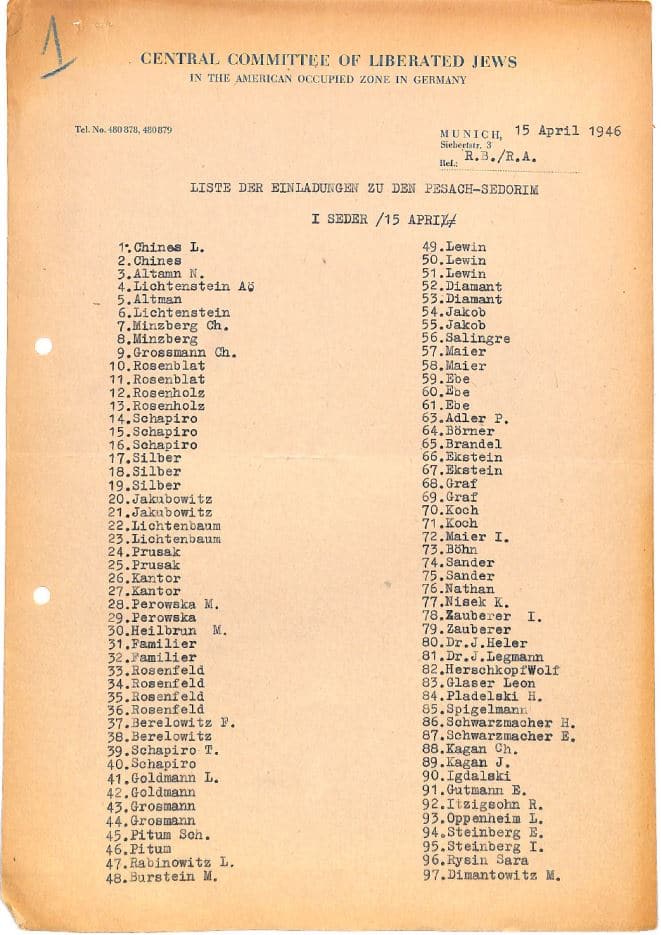
The invite list to the Seder conducted by Rabbi Klausner in the Munich Theatre, held on the same night as the Seder of the displaced persons camp in Munich, is preserved in the Central Archives for the History of the Jewish People. The list shows that only a few of the five hundred participants of the Passover Seder conducted by Rabbi Klausner were Holocaust survivors. The majority were soldiers in the U.S. armed forces.
A partial list of the invitees to the Passover Seder of the U.S. Army in Munich
The letter A was stamped on the title page of Rabbi Klausner’s private copy, indicating it belonged to the U.S. Army. On the same title page is the date and the location of the Seder at which the Haggadah was used: Munich, Germany, April 15-16, 1946″.
The title page of the Haggadah
Rabbi Klausner’s personal copy is currently stored in the Haggadah Collection of Aviram Paz. It was lent to the National Library for its “Next Year We Will Be Free Men” exhibition – an exhibition of unconventional Passover Haggadot from the years leading up to the founding of the state.
How Communist Jews Made the Haggadah as Red as the Blood in the Nile
According to this Soviet Russian Haggadah, the eternal revolution of Marx and Lenin was responsible for liberating the Jews from the bondage of the bourgeois...
“Next year in Jerusalem!” cry the multiple voices of Jews around the world when they finally reach the end of the Seder, the ritual meal of Passover. It is during this never ending meal that Jews recount the road out of slavery towards liberty. This is when parents tell their children that in every generation, every Jew, must consider themselves as though they had been freed from the bondage of Egypt.
Except in Soviet Russia, where a special Haggadah was written and distributed in which the cry for revolution, not Jerusalem, was brought to the table. “This year a revolution here; next year – a world revolution!”
The communist Jews of the early Soviet Union put together special propaganda Haggadot in which the old Jewish traditions were decried and the new communist ideas were embraced. One of them was the Komsomolishe Haggadah, published in Moscow in 1922 by Moshe Altshuler.
Cover of the Komsomolishe Haggadah, 1922
One way in which Altshuler portrayed these new ideas was in using the language of Passover to show how communist ideals have and will continue to spread throughout the world. For example, one of the traditions prior to the celebration of Passover is the removal of leavened bread and products made of wheat in general from the home.
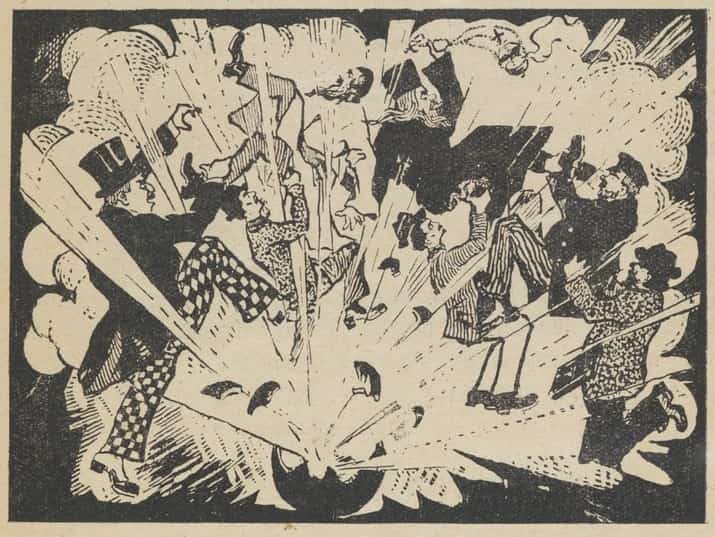
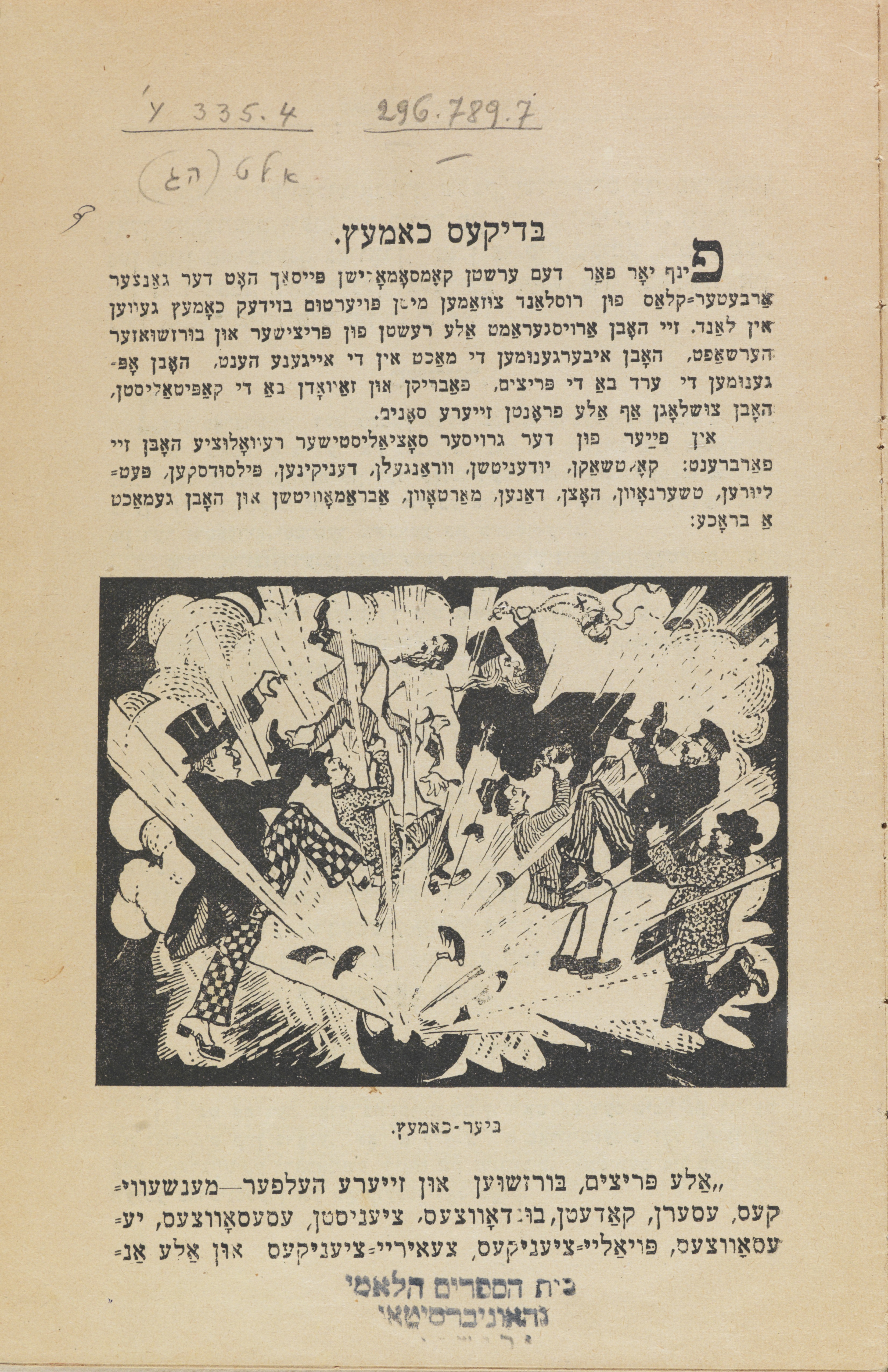
They are then gathered in a pile and set on fire so that they can be destroyed. This is called in Yiddish bdikes-khomets, literally meaning, “checking for chametz “, the remnants of bread and wheat products in the home. Altshuler interprets this bdikes-khomets in this way:
“Five years before the first Komsomol Pesach all Russian proletariat and peasants performed bdikes-khomets in the land. They removed all remnants of the rule of the bourgeoisie and landowners, gained power in their hands and defeated the enemy on all fronts.
In the fire of Great Socialistic Revolution they burned kolchaks, yudeniches, vrangels, denikins, pilsudsskis, petlurs, chernovs, gotzs, dans, martovs, abramoviches and said the brokhe: “All landowners, bourgeois and their minions – Mensheviks, SRs, CaDets, Bundists, Zionists, Poale Zions, Tsaire Zions and all other counter-revolutionists, nuisances, ne’er-do-wells and parasites should be burned in the fire of the Revolution. Those who were already burned, shall never rise again, and as to those who will remain, we will sacrifice them and hand them over to the State Political Directorate.”
Removing the bourgeois chametz, Komsomolishe Haggadah, 1922
What else is there to say?
Altshuler wanted to show the younger generation that the old bourgeois ideas were as bad as khometz during Passover. By using the colloquial language, Yiddish, and the older traditional form of the Haggadah, he made the Soviet revolution accessible to every Jew living in Moscow and beyond.
The Haggadah is chock-full of examples where Altshuler appropriated the religious activities and made them communist for the proliferation of communism. Like the splitting of the matzah (Yechatz – יחץ) in which the revolutionary Proletariat split the control of the means of production from the capitalist bourgeois, the wrapping (Korech – כורך) in which the revolution consumes the bosses and oppressors of the working class, and the sacrifice itself, (Korban Pesach – קרבן פסח), which looks shockingly traditional.